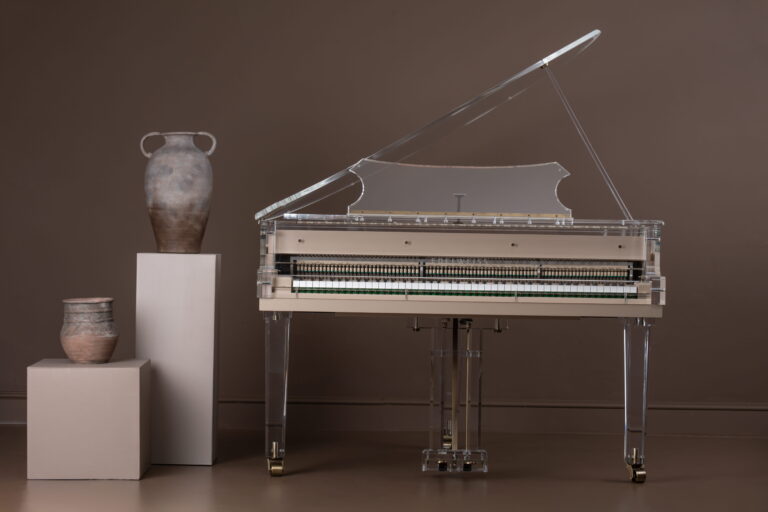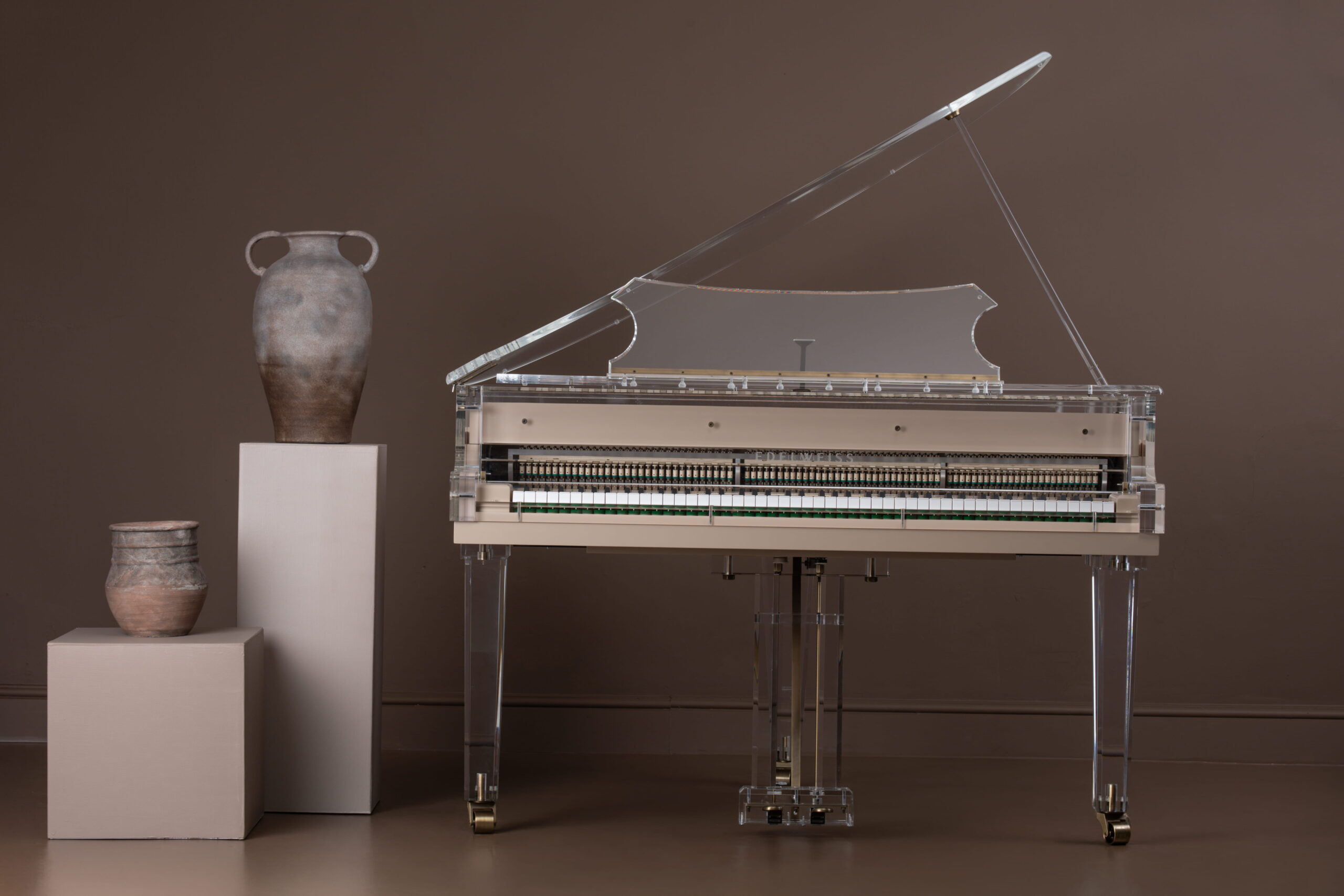
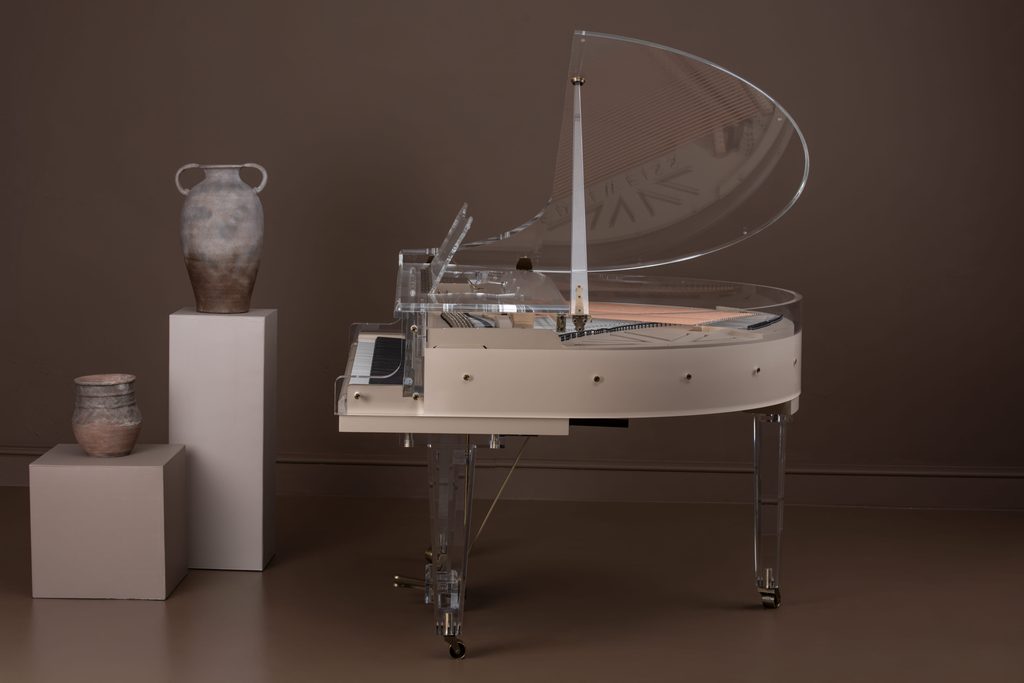
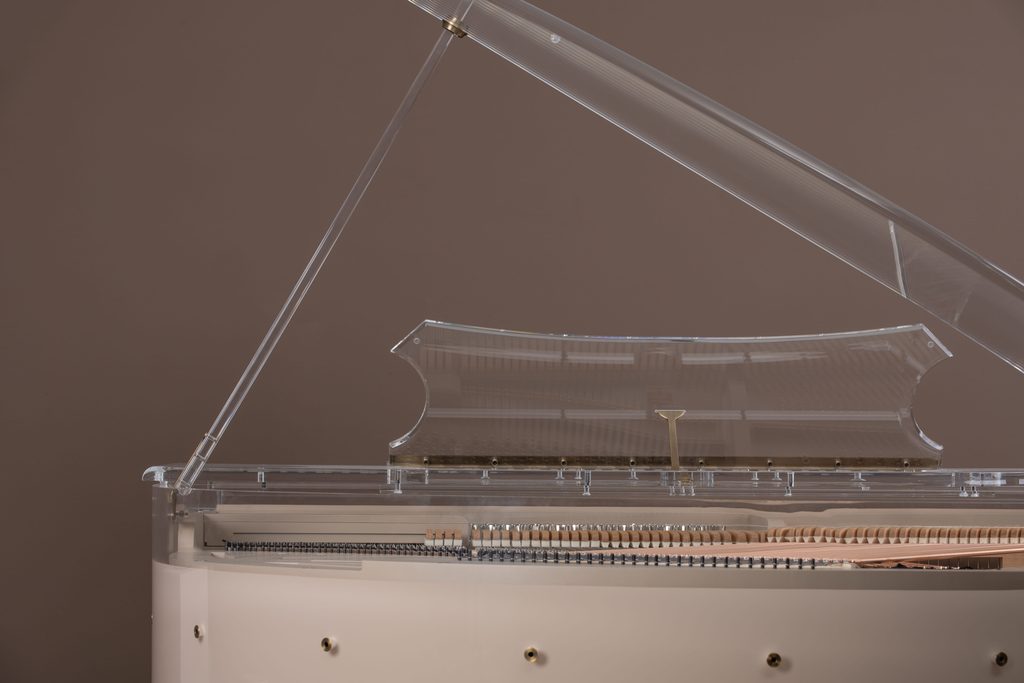
The Aurora Transparent, as you know it. A clear acrylic case. The engineering in full view. Felt hammers, copper strings, and self-play as standard.
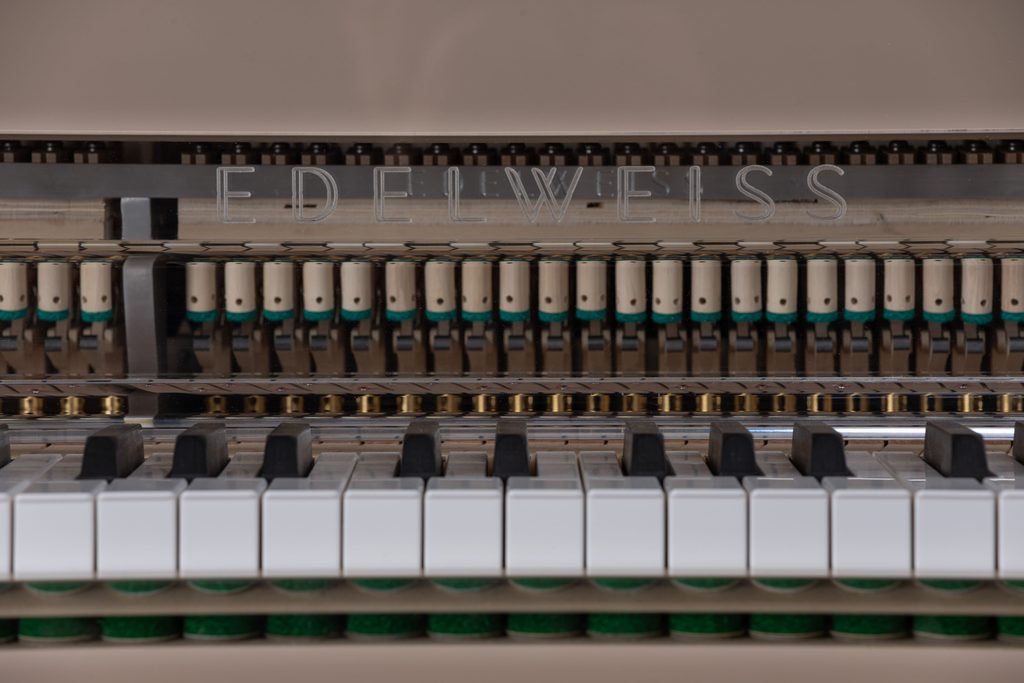
One thing has changed. Everything you see through the acrylic is now finished in Plaster, a soft, warm neutral created for this edition alone.
A self-playing transparent grand piano, with one change
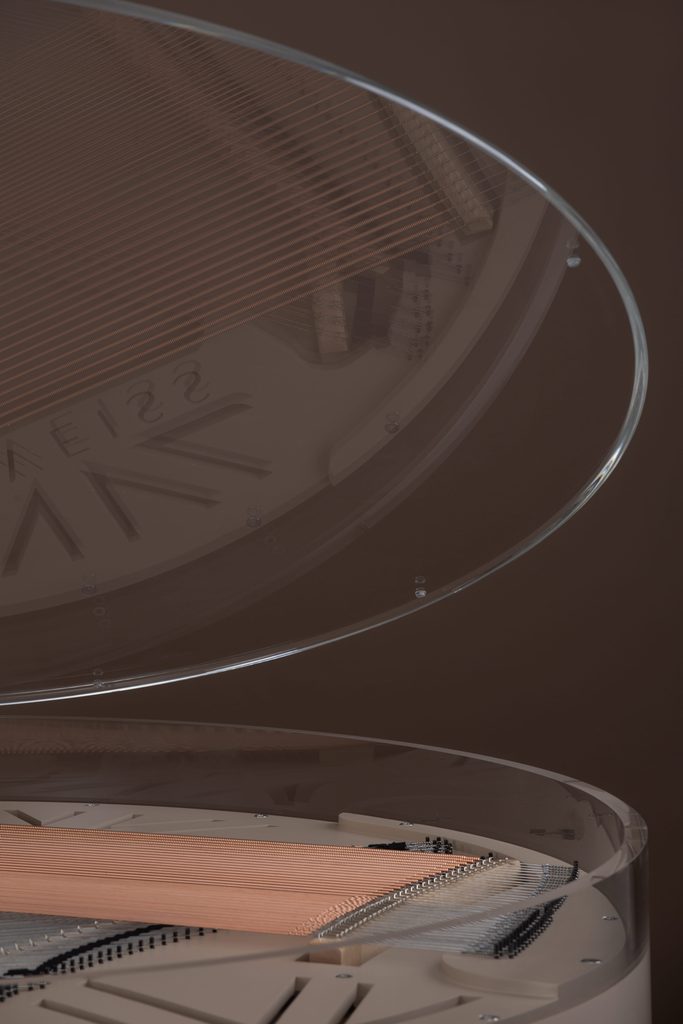
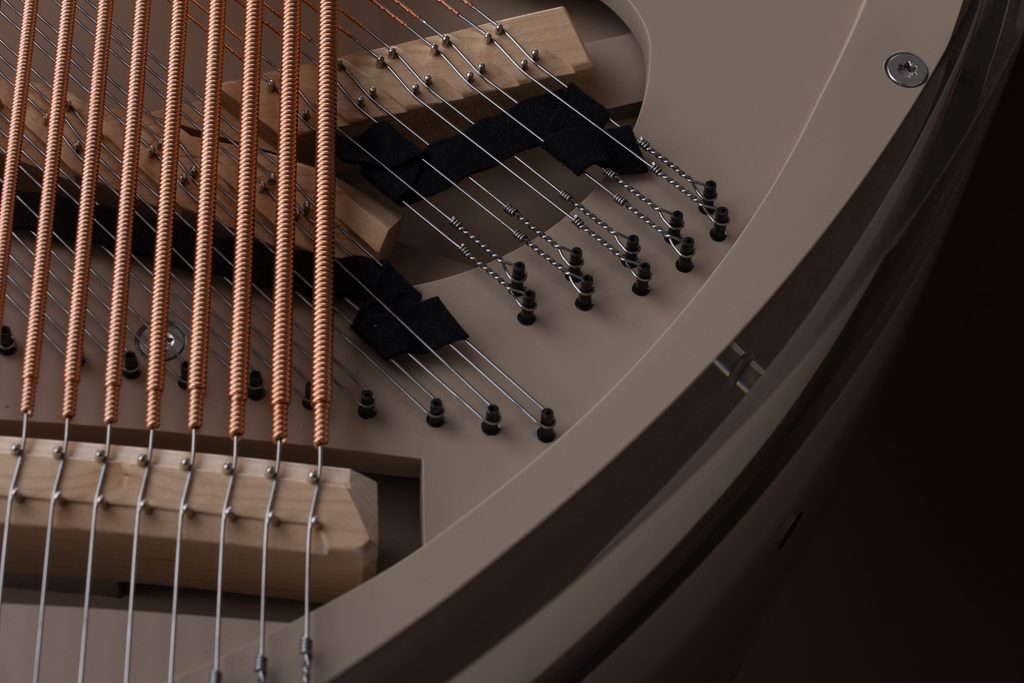
A white interior reads crisp and graphic. Plaster softens the whole instrument. The copper strings read warmer. The acrylic takes its tone from the room around it, not from a gallery.
Why Plaster, why now
For most of the last decade, the default neutral in a considered interior was a cool grey. That has shifted. Little Greene’s 2026 forecast favours neutrals with earthy undertones, chosen for warmth and calm. Sherwin-Williams chose a warm mid-tone neutral for 2026, and Pantone a soft white (ArchDaily). Designers report clients asking for warm neutrals in lime and plaster finishes, not flat paint.
Sand. Stone. Clay. Plaster. Colours that come from material, not from a fan deck.
Calm, never cold
Plaster sits at the warm end of that range. Pale enough to stay quiet beside the copper. Warm enough that it never reads clinical.
That matters in British light, low and cool for much of the year. A cool neutral turns grey by four o’clock on a November afternoon. Plaster holds its warmth from morning to lamplight.
It sits easily beside the materials designers already specify. Linen and undyed wool. Pale or smoked oak. Limewashed walls. Honed limestone and travertine. In a deeper scheme of clay, caramel or chocolate, it becomes the light in the room.
A transparent piano is only as calm as the colour inside it.
Antique brass, chosen for this edition
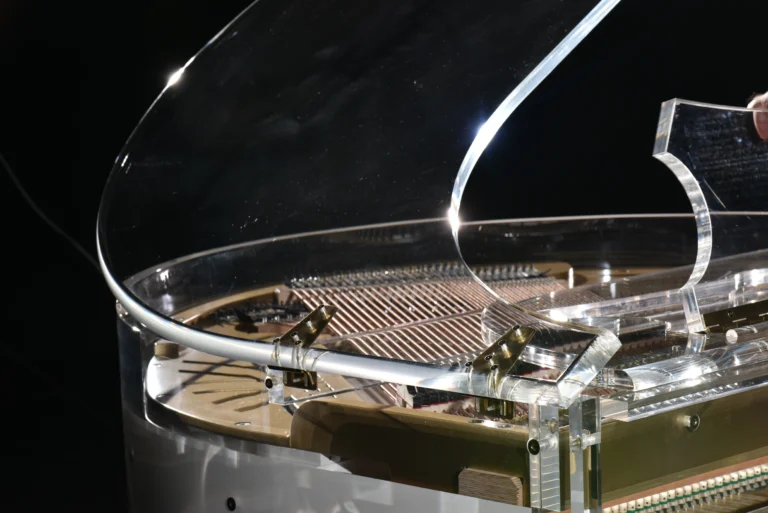
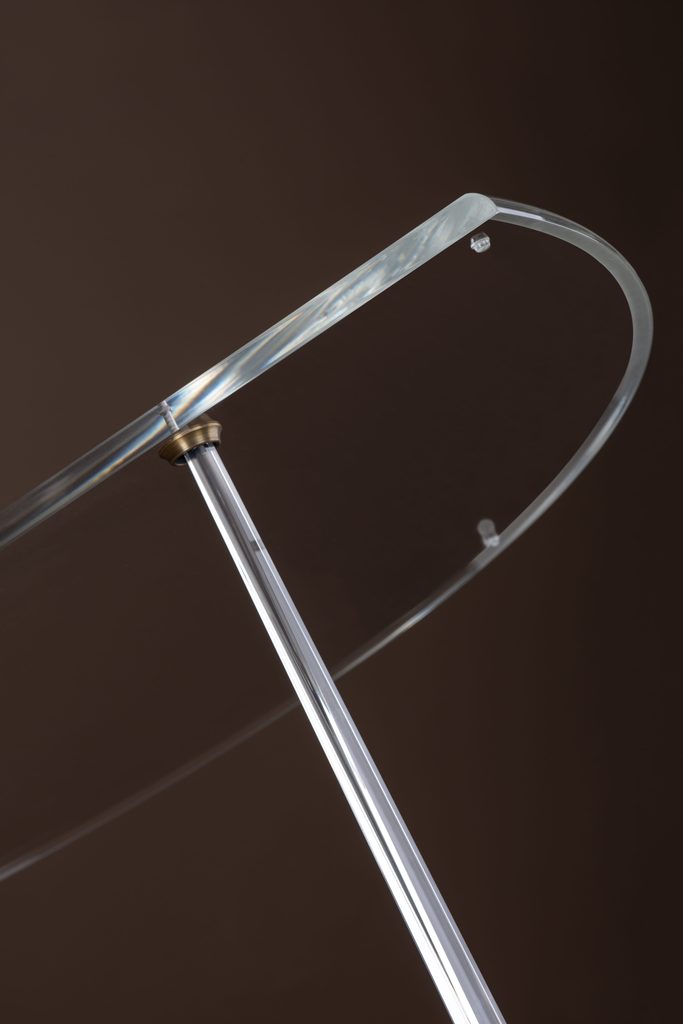
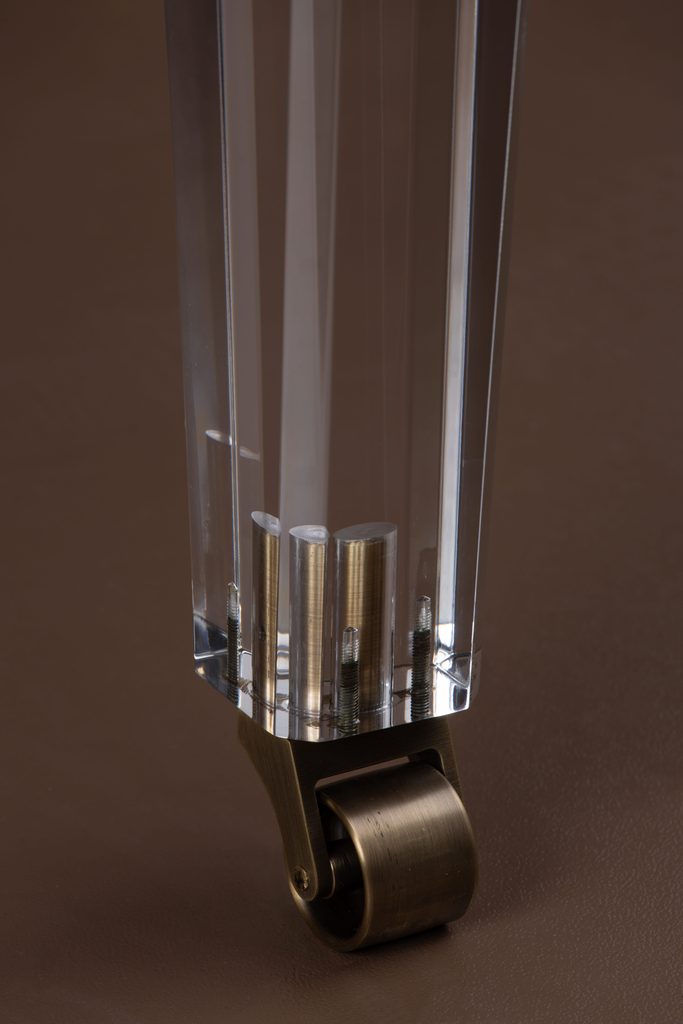
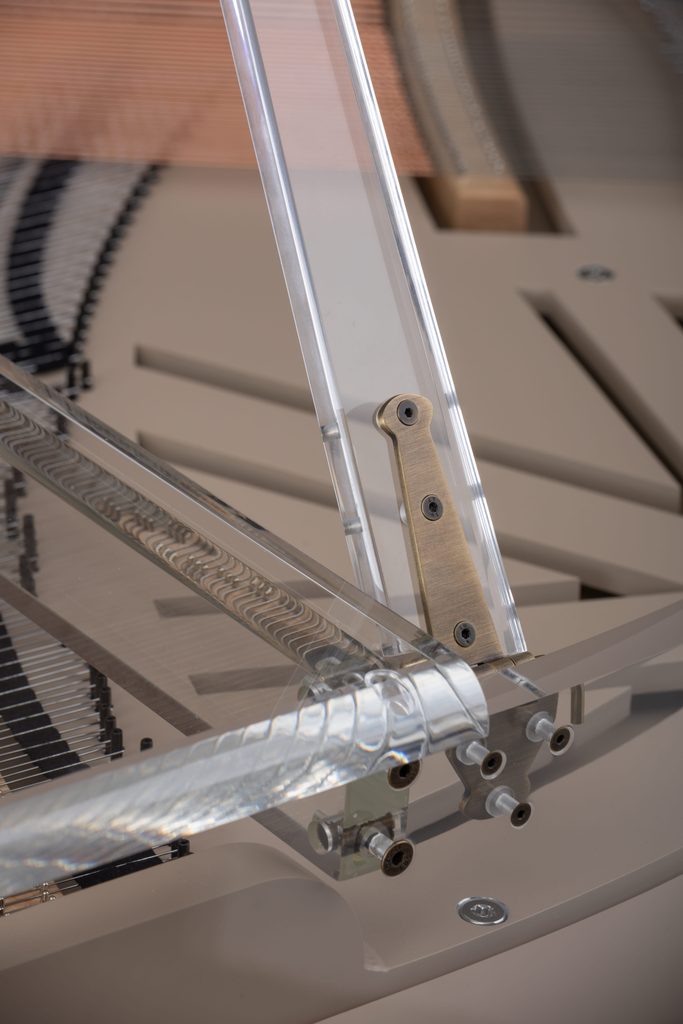
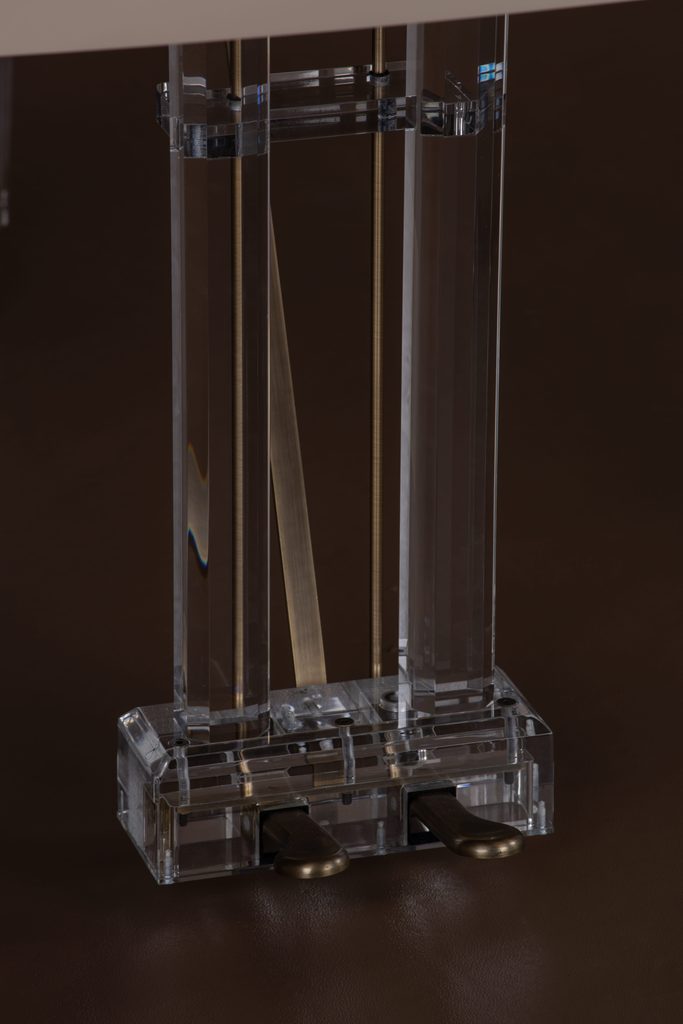
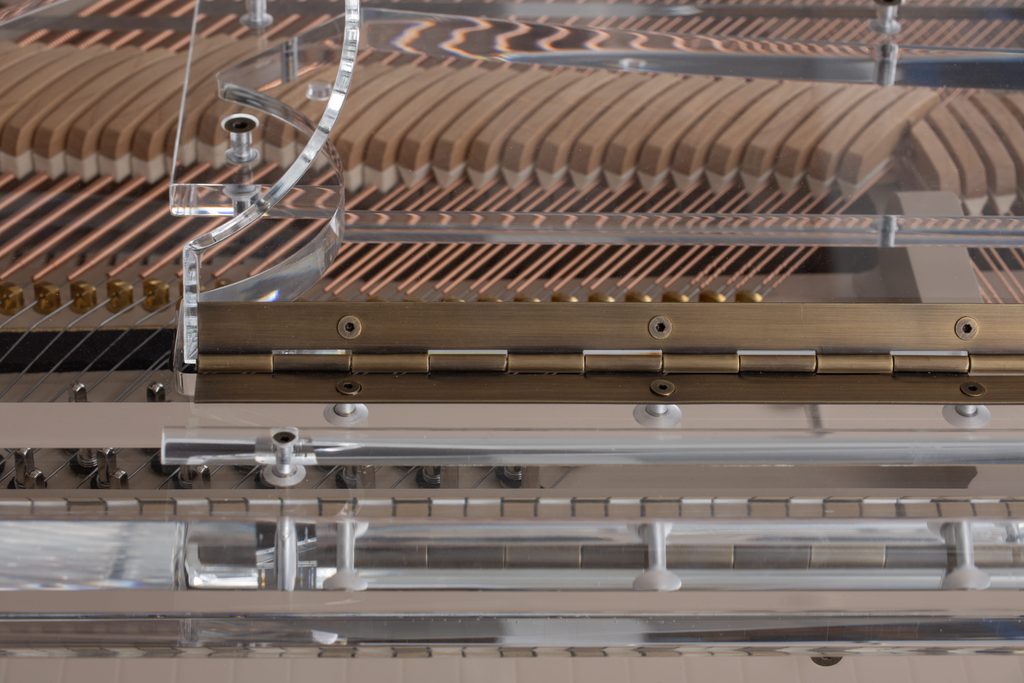
The hinges. The lid fittings. The fixings around the rim. The castors. Each is finished in antique brass.
New brass is bright and even. Antique brass carries the depth that brass usually takes years of handling to earn. Softer than polished gold. Warmer than bronze. Amber in low morning sun, quieter at midday, deepest by lamplight.
Antique brass is the choice for this edition, not the only option. Aurora hardware is specifiable, so a project with its own metal palette can carry it through to the piano.
Acrylic, not glass
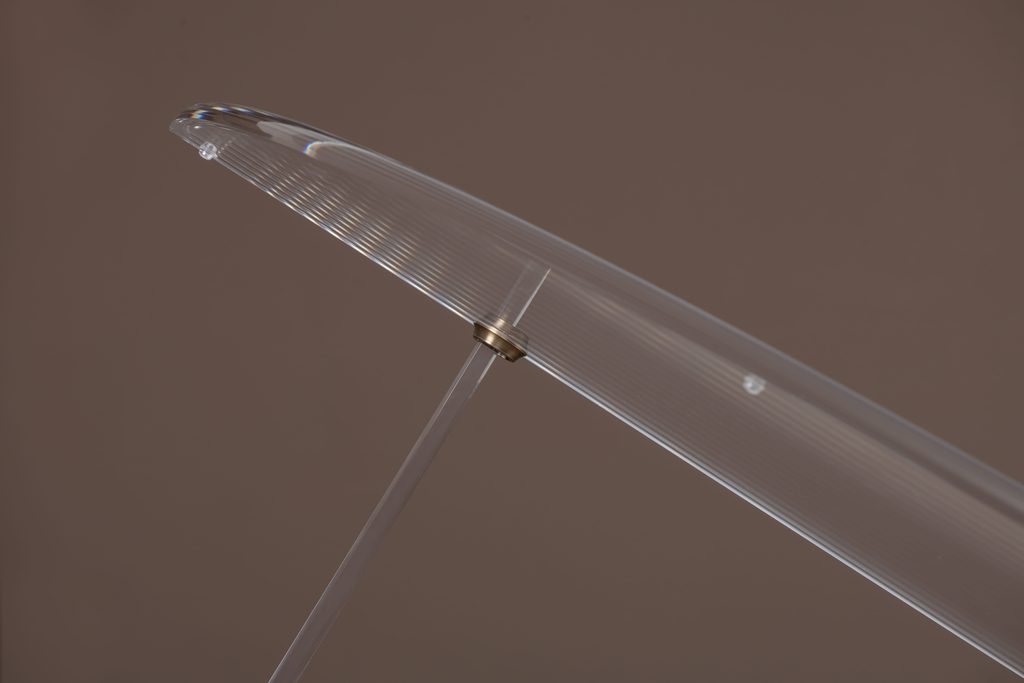
Transparent pianos are often called glass or crystal pianos. The Aurora Transparent is neither. Its case is acrylic: as clear as glass, considerably lighter and far more resistant to impact.
Light passes through it. Sightlines stay open, to a window, an artwork, the garden beyond. The lid can stand open without closing off half the room. We explored that idea in Light as Materiality, and there is more in our complete guide to transparent pianos.
Self-play, in full view
Every Edelweiss plays itself. Choose a piece on the iPad. Press play. Felt hammers strike copper strings. The sound is live because it is live.
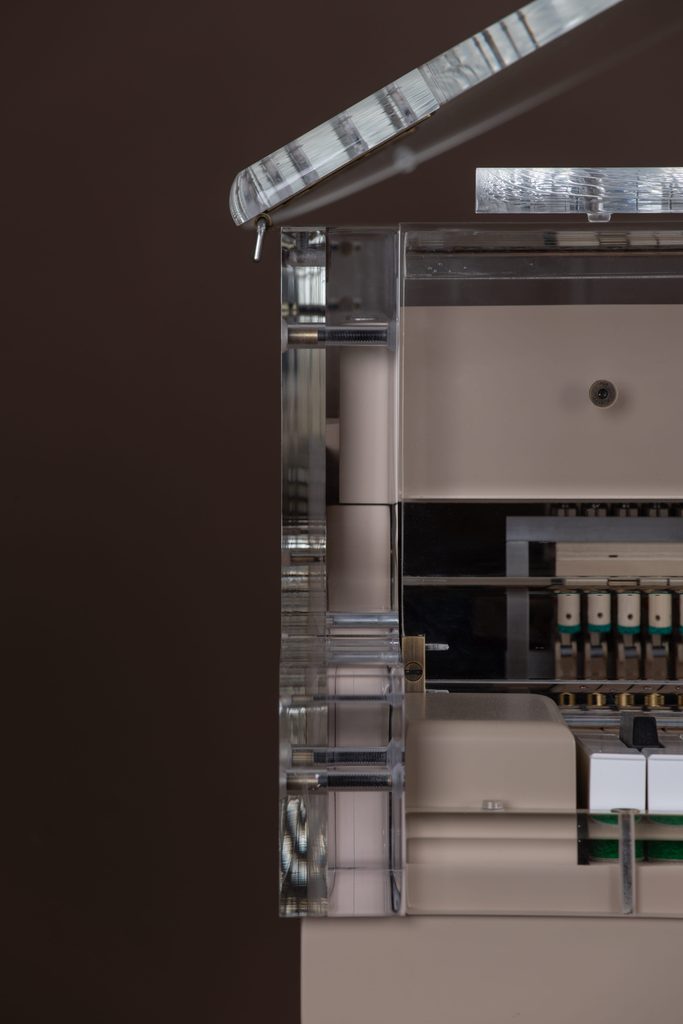
In most pianos, you hear self-play. In the Aurora Transparent, you can watch it: the hammers rising and falling behind the acrylic, with no one at the keys. The mechanism stays invisible. Only the music, and the movement, show.
1,000 pieces as standard, expandable to 5,000. Bespoke recordings on commission: any piece, any artist, made exclusively for your piano. How self-play works.
Plays beautifully. Even if you don’t.
Aurora, built entirely in Britain
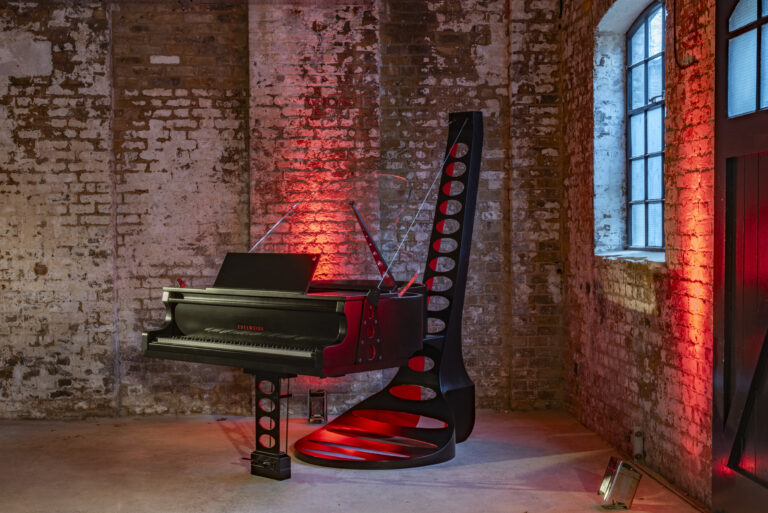
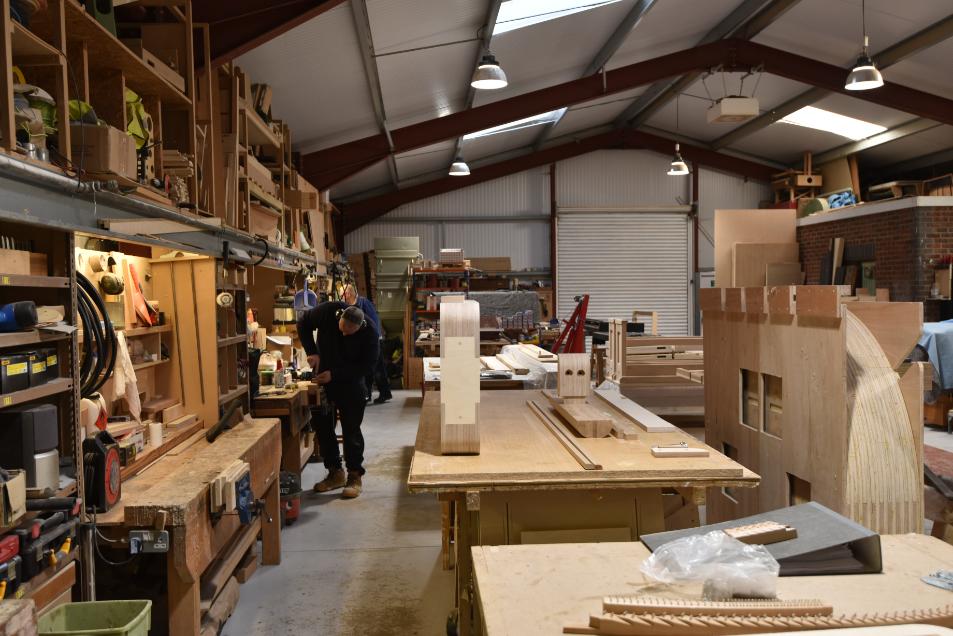
Beneath the acrylic is Aurora, our hero model. Twice patented. Built entirely in Britain, by hand, in our Cambridge workshops.
It shares Sygnet’s footprint, and nothing else. Its patented engineering gives a depth of sound this size should not be capable of. That knowledge began in 1975, when Roy Norman started restoring pianos in Cambridge, and has passed through three generations since.
Your colour, your hardware
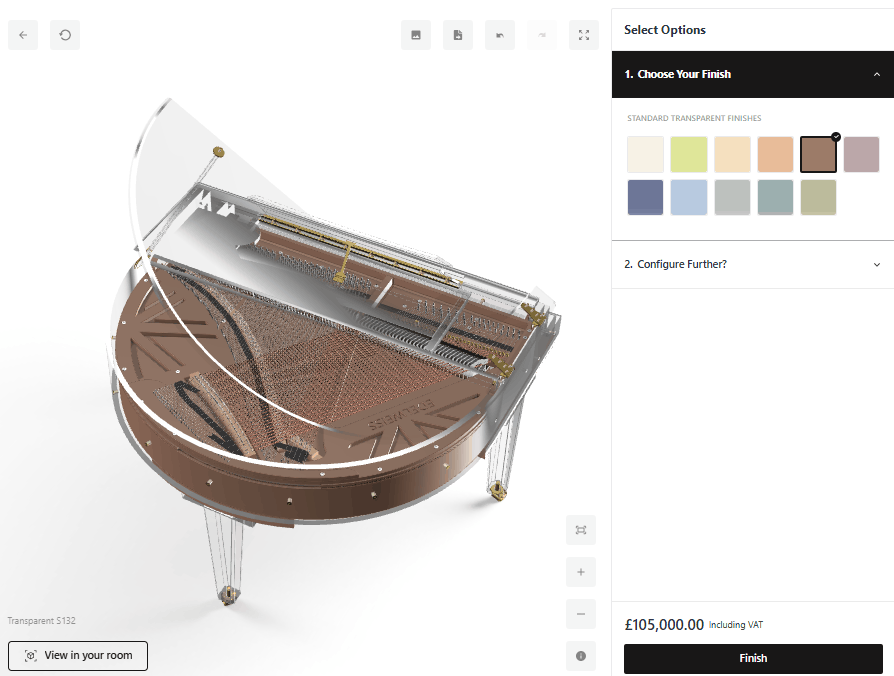
Plaster as shown. Or any colour from the full Farrow & Ball and Little Greene ranges, any RAL reference, or a match to the scheme. Lacquer or hand-rubbed oil. Anything beyond that goes to our Design Studio.
Where to see it
The Plaster Edition is on display now at Harrods, Knightsbridge, and is available for pre-Christmas delivery. The Aurora Transparent can also be seen at our Cambridge workshop in Fulbourn, the New York Design Center on Lexington Avenue, and 11 Ravens at the Pacific Design Center in Los Angeles. Find a showroom.
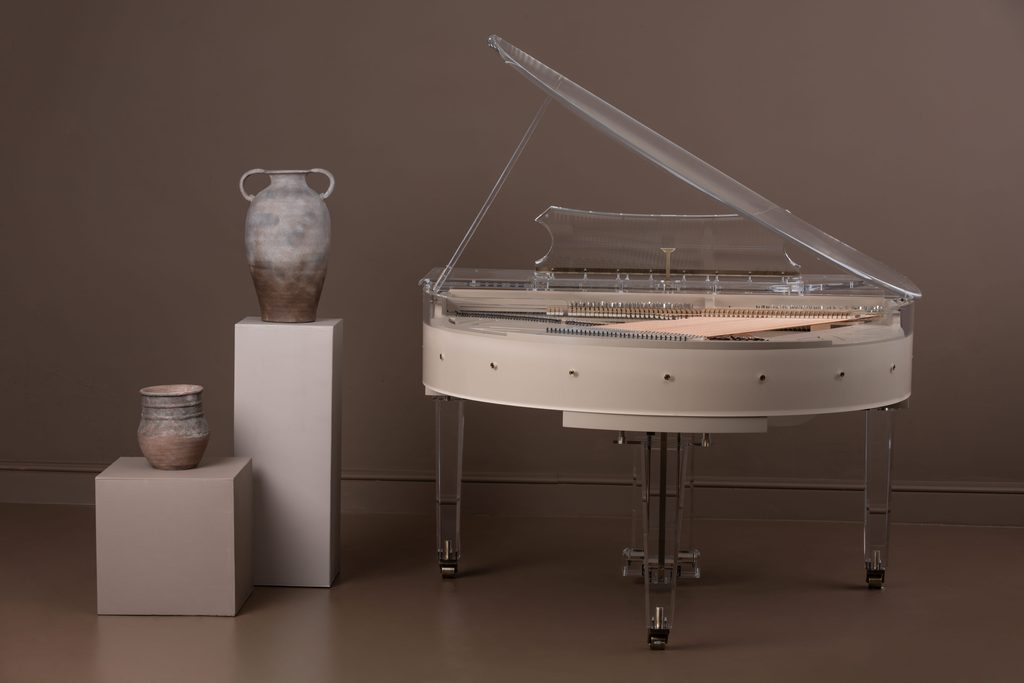
88 keys. Fully acoustic. Length 132cm / 4ft 3in. Width 146cm / 4ft 8in. Height 170cm / 5ft 6in. Weight 352kg / 777lbs. Full specification on request.