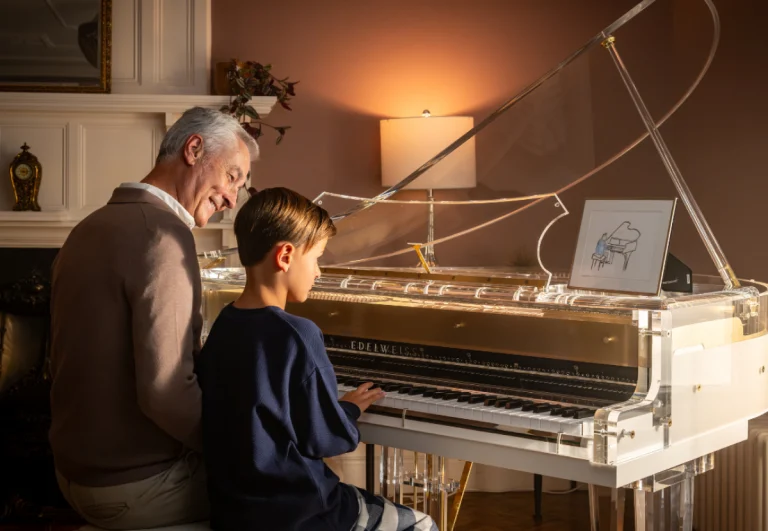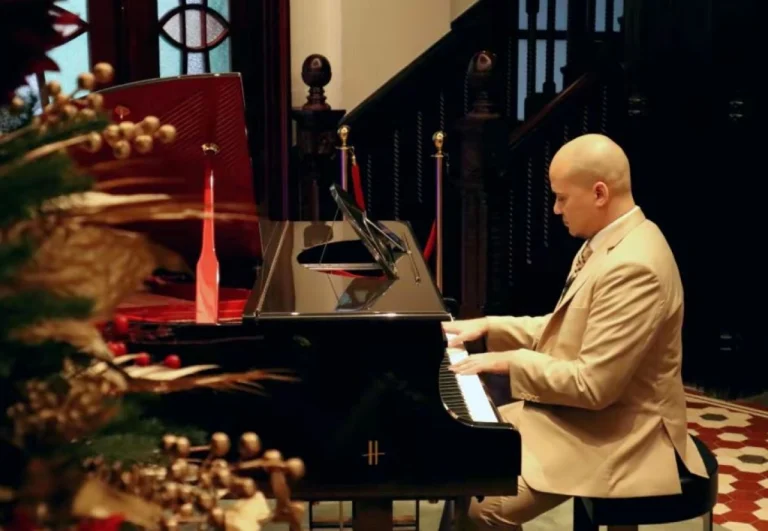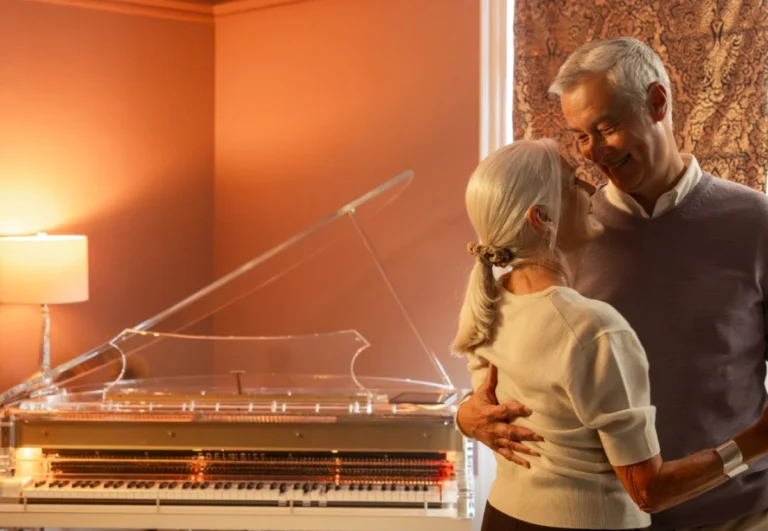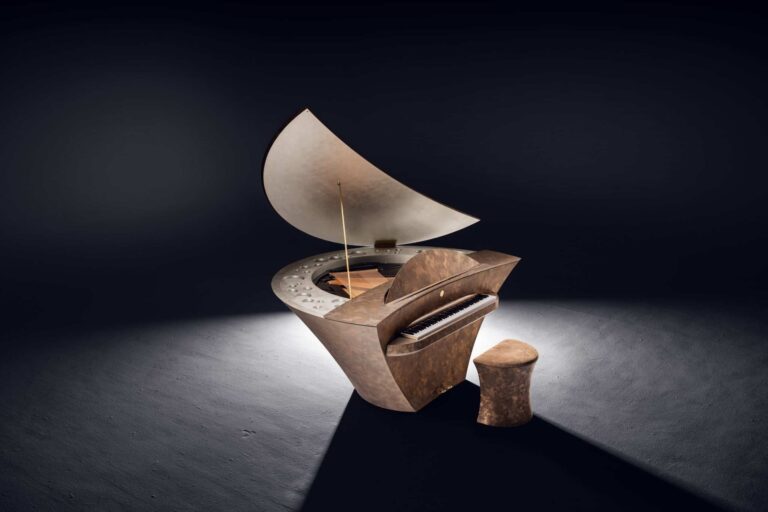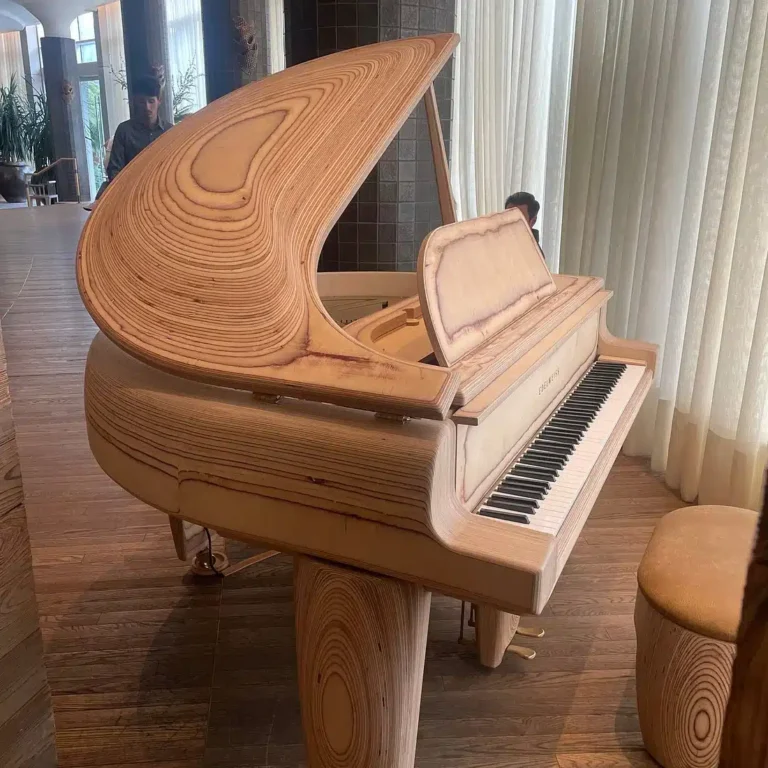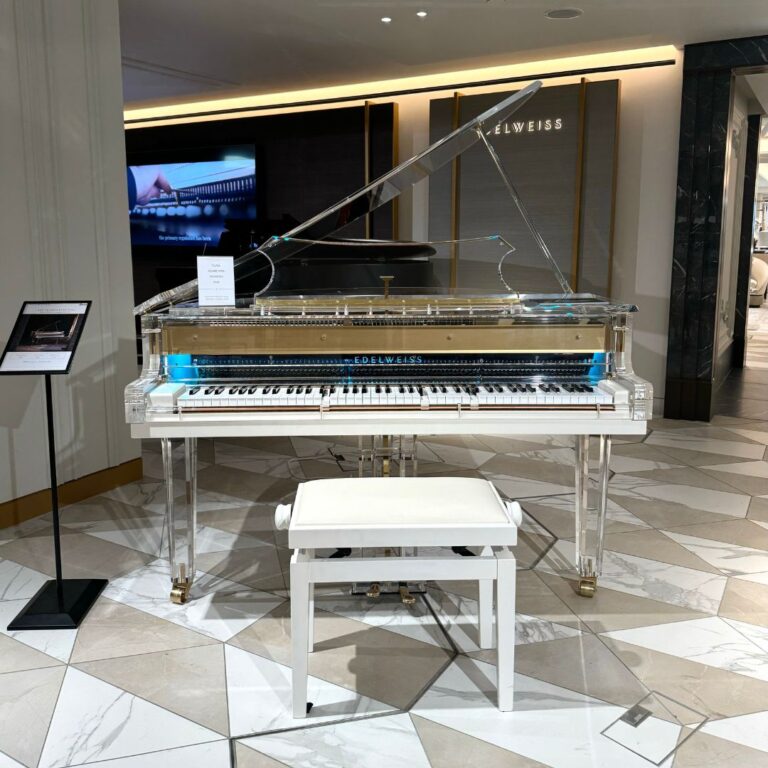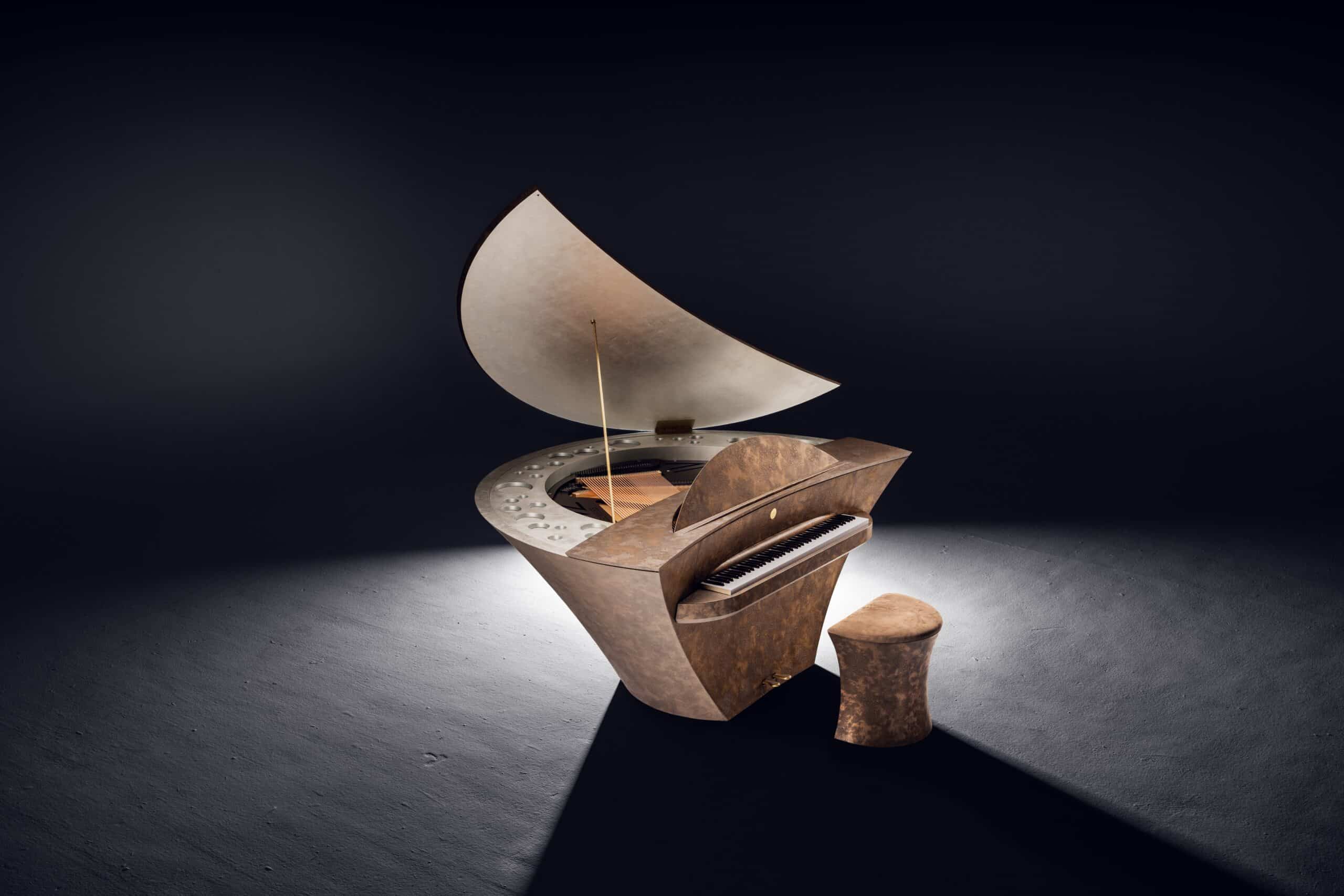
There is a question that comes up almost every time someone first considers a piano that plays itself.
Is it a real piano, or is it digital?
It is a fair question. The two can look similar from across a room. Both are controlled from a phone or a tablet. Both promise music without a pianist at the keys.
Stand beside each one as it begins to play, and the difference is unmistakable.
A digital piano produces sound through speakers. A self-playing acoustic piano produces sound through strings, hammers, wood and air, the way a grand piano always has. The system behind the music is modern. The voice is not.
This article is about why that distinction matters. And why, for an instrument that will live in a home for decades, acoustic still wins.
What a Digital Piano Actually Is
A digital piano is an electronic instrument.
Press a key and a sensor registers the movement, triggering a recorded sample of a piano note through built-in speakers. There are no strings inside the cabinet. No soundboard. The keys are weighted to feel like a piano, but nothing is struck. The sound was recorded somewhere else, on a different instrument, and stored in memory.
The best digital pianos are sophisticated. Samples recorded at multiple velocities, so a soft touch calls up a different recording from a firm one. Mathematical modelling to simulate the way notes interact.
But a sample has a ceiling. A recording is one moment, captured in one room, on one instrument. Played back through a speaker, it no longer responds to the space around it. It is projected into the room. A film of music, rather than music.
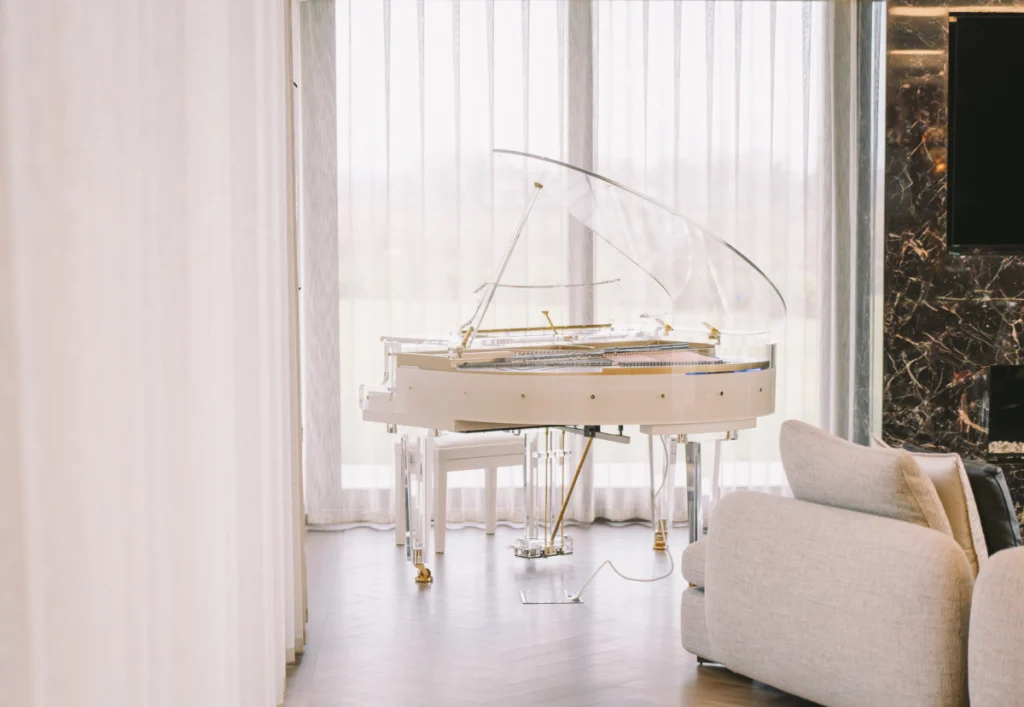
What a Self-Playing Acoustic Piano Actually Is
A self-playing acoustic piano is, first, a piano.
Strings under tension. Felt hammers. A soundboard of solid wood. When a note sounds, it is because a hammer has physically struck a string, sending vibration through the bridge into the soundboard and out into the room. The mechanism is the same one inside any concert grand.
What makes it self-playing sits beneath the keyboard.
Precision solenoids, small electromagnetic actuators, move the keys from below with more than 1,800 gradations of force. Enough range to carry a melody at a whisper or land a fortissimo chord at full weight. The system is wireless, controlled from an iPad, and completely invisible. Nothing hums. Nothing whirrs. Only the music is audible.
The keys still do the work. The hammers still strike the strings. The soundboard still resonates. The piano is performing. It is simply being performed by a different kind of pianist.
For the engineering in detail, our piece on how self-playing pianos recreate a human performance walks through how the touch and timing of the original musician are captured and replayed.
The Sound: Speakers Versus Strings
This is where the two part ways.
On a digital piano, every note is a recording played through a speaker. However good the sample, the physics are those of any audio system. A driver, a cone, amplification into the room.
On an acoustic piano, every note is created in the moment.
A struck string vibrates at its fundamental frequency and a cascade of harmonics. The soundboard, an enormous resonator, projects that vibration through the air with a depth no speaker fully recreates. Undamped strings begin to vibrate in sympathy. The rim, the lid and the legs colour the sound. Then the room adds its own signature.
The result is sound that is alive. Every performance is shaped by the room it happens in, because the room becomes part of the instrument.
In an Edelweiss, some of that richness begins with the strings themselves. Bass strings wound with hand-drawn copper, spun on Röslau wire, the German-engineered wire chosen by the world’s leading piano makers for its tonal stability and clarity. None of that can be sampled and played back through a speaker. It can only happen when the piano itself is the source.
Touch, Response and Feel
Pianists talk about the feel of an instrument before they talk about its sound. The two are inseparable.
A grand piano action is one of the most refined mechanisms ever built into an instrument. Press a key and a sequence of levers, hammers and dampers responds to the speed, pressure and release of the finger. Strike harder and the hammer travels faster, the note sounding louder and brighter. Lift gently and the note rings on.
Digital pianos replicate this with weighted keys and graded hammer action. The best come remarkably close under the fingers. But they remain a simulation of an action, not the action itself. Beneath the keys there are no hammers, no escapement, no strings answering back.
On a self-playing acoustic piano, the difference runs in two directions. The piano can always be played by hand. Whether the system is performing or sitting silent, the keyboard is a full grand piano action, ready for any pianist who sits down. And when self-play is engaged, the solenoids drive that same real action. The dynamics, timing and pedalling of the original performance pass through the same mechanism a human pianist would use.
The instrument is not pretending to play. It is playing.
Longevity: A Lifetime Versus a Lifecycle
The quietest difference between the two, and one of the most significant.
Acoustic pianos are built for generations. Tuned and cared for, a well-made grand remains musically excellent for fifty years and more, and many instruments still in use today are over a century old. Timber, copper, steel and felt age gracefully. They can be restrung, re-felted, restored.
A digital piano is an electronic device. Its useful life runs ten to twenty years. Circuit boards, sensors, power supplies and speakers eventually fail, become obsolete, or fall out of support. When the technology reaches the end of its life, so does the instrument.
A self-playing acoustic piano sits on the longer side of that divide. The instrument itself lasts for generations. The self-play system inside is modular, updatable and serviceable, designed to be maintained over time without compromising the piano around it. The technology serves the instrument. It does not define its lifespan.
Where Each Instrument Belongs
Digital pianos have real strengths, and it is worth being honest about them.
They are lighter, more portable and more affordable. They never need tuning. They can be played silently through headphones, which makes them right for late-night practice, for small apartments, for a student not yet ready to commit. For a working musician who needs something that lifts into the back of a car, a good digital piano is often the correct choice.
A self-playing acoustic piano is a different proposition. It is a permanent presence, in a room designed around it or a home that intends to keep it. It is for the person who wants the sound, the feel and the visual weight of a real grand piano, and the freedom to fill the room with music whether or not anyone is there to play it.
A digital piano answers the question of how to play music. A self-playing acoustic piano answers a different question entirely. How to bring live music into a space, every day, for decades.
Why Acoustic Still Wins
It is tempting to frame this as a contest between old and new technology. It isn’t.
A self-playing acoustic piano is, in many ways, the most modern instrument of the three. Centuries of piano craft, carrying the latest in MIDI control, wireless playback and a curated library of recordings. Nothing about it is nostalgic.
What makes the acoustic version win is that the technology serves the music rather than replacing it.
The keys rise and fall under a real action. The hammers strike strings of hand-drawn copper and Röslau wire. The soundboard resonates through solid wood. The room becomes part of the instrument. None of it has been simulated, sampled or compressed into a recording.
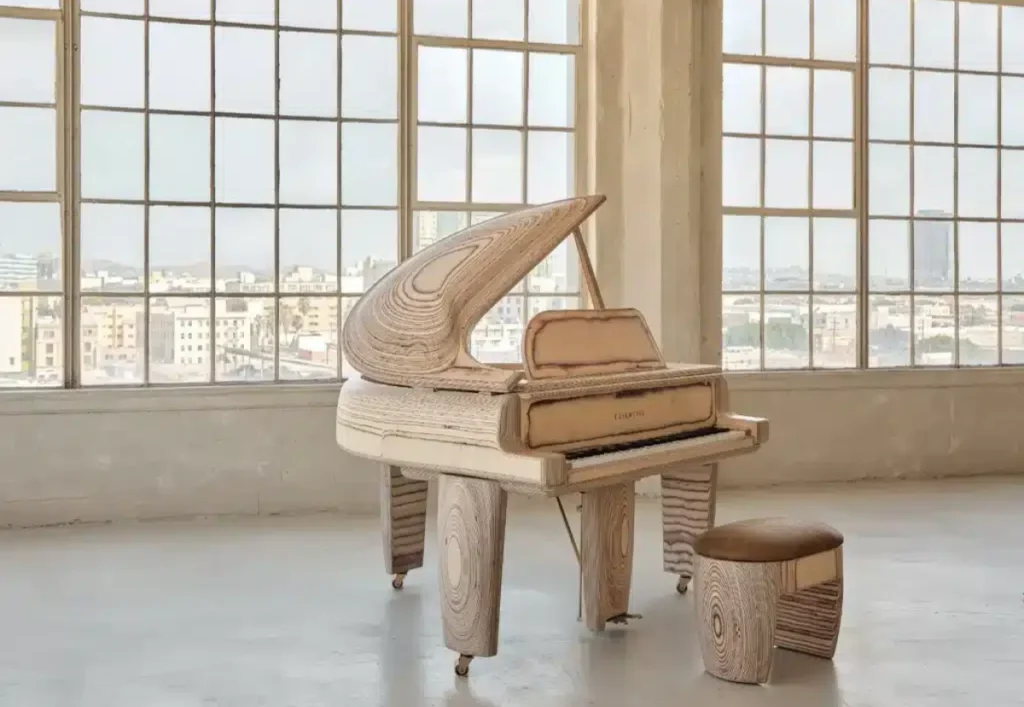
Every Edelweiss is built this way as standard. Self-play is fitted to every piano that leaves the Cambridge workshop, so every Edelweiss is at once a full acoustic grand and an instrument that can perform on its own. For the wider story of how these instruments came to be, from paper rolls to MIDI, our ultimate guide to self-playing pianos is a good place to start.
A digital piano can give you music. An acoustic piano gives you a performance. A self-playing acoustic piano gives you something rarer still. A performance that does not depend on anyone being there to play it.
That is why, for the home where music matters, acoustic still wins.