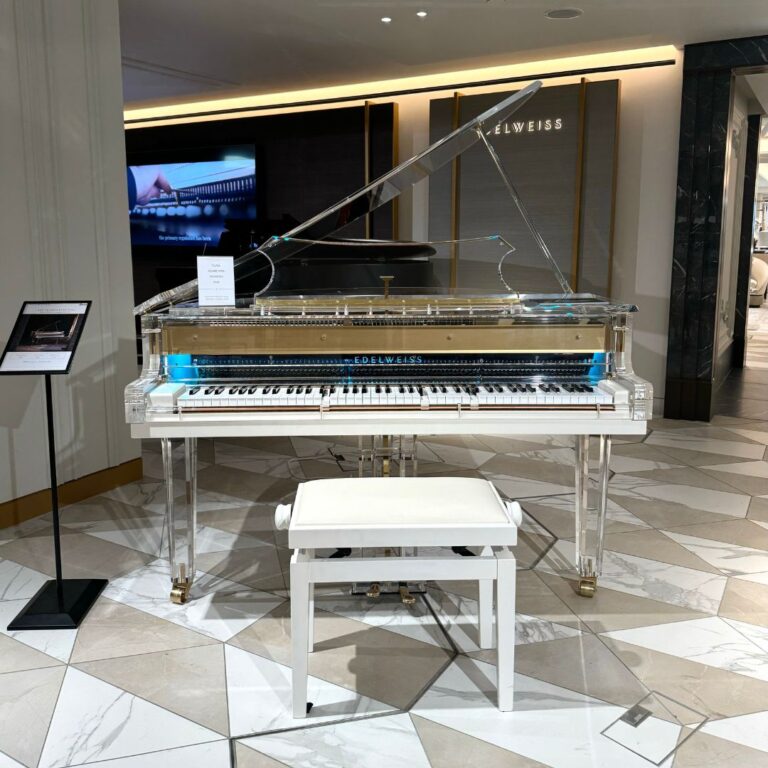
The Santa Monica Proper Hotel Piano
A Lobby That Doesn’t Behave Like One
A lobby can be many things. A threshold. A waiting space. A place you pass through without noticing.
At the Santa Monica Proper Hotel, it behaves differently. You enter, and almost immediately, the space asks you to slow down. Light moves across textured walls. Furniture feels placed rather than arranged. There is a sense that everything has been considered — not just visually, but atmospherically.
And then, at a certain point within the room, your attention settles.
On a self playing piano.
A Hotel Designed Around Atmosphere
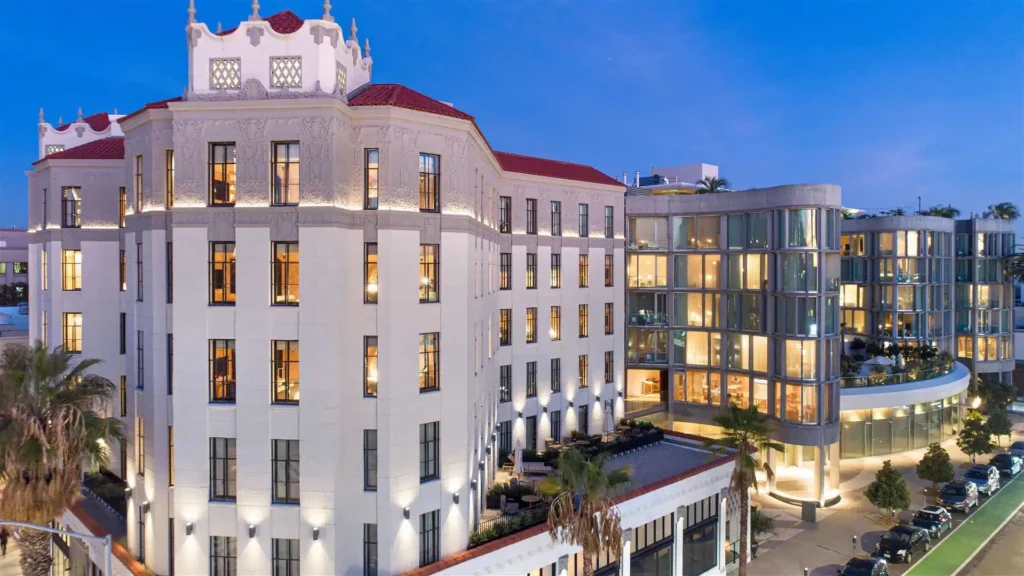
The hotel itself sits just a few blocks from the ocean, but it doesn’t rely on the obvious cues of coastal design. There are no clichés here. Instead, the identity of the space is built through layers — Spanish Colonial architecture reinterpreted through a contemporary lens, natural materials softened by light, and interiors that feel both curated and instinctive.
This is where Kelly Wearstler brings her signature approach into focus.
The Santa Monica Proper Hotel was conceived not simply as a place to stay, but as a living environment — one that blends hospitality, design, and local culture into a single, fluid experience. Spaces are designed to be used, not observed. You move through them without feeling directed, yet everything subtly guides how you interact with the room.
Within that philosophy, every object matters.
The Palma Lounge and the Piano
The Heart of the Space
The Palma Lounge sits at the centre of the hotel — part restaurant, part social space, part living room for the building. It is open, but not exposed. Layered, but not crowded. The kind of environment where people drift between conversations, meals, and quiet moments without ever feeling rushed.
Vintage and contemporary pieces sit side by side. Textures shift from table to table. Light filters in differently depending on where you sit. It feels alive — not in a loud way, but in a way that encourages people to stay a little longer than they planned.
Within that context, certain elements begin to anchor the room.
One of them is the piano.
The Piano as Part of the Architecture
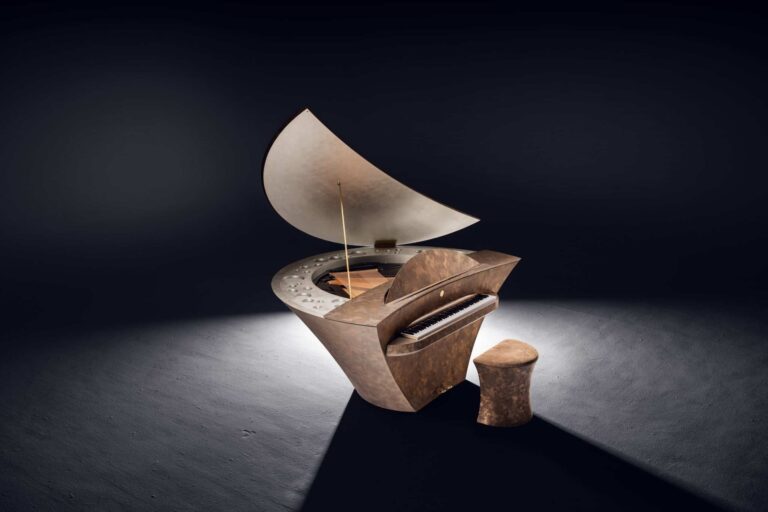
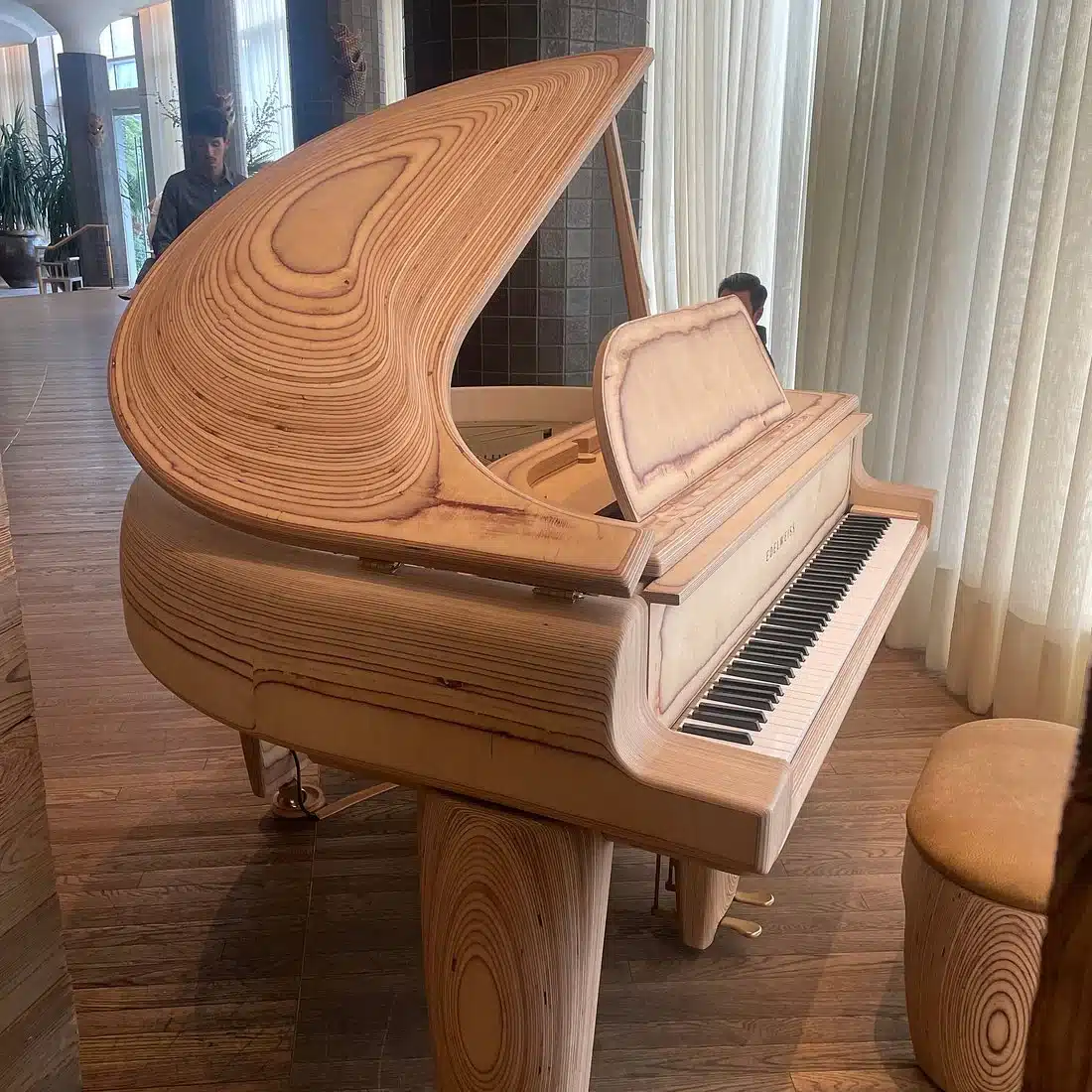
The piano inside the Palma Lounge is not an addition. It does not feel placed into the room after the fact. It reads as though it belongs to the architecture itself — something that was always meant to be there.
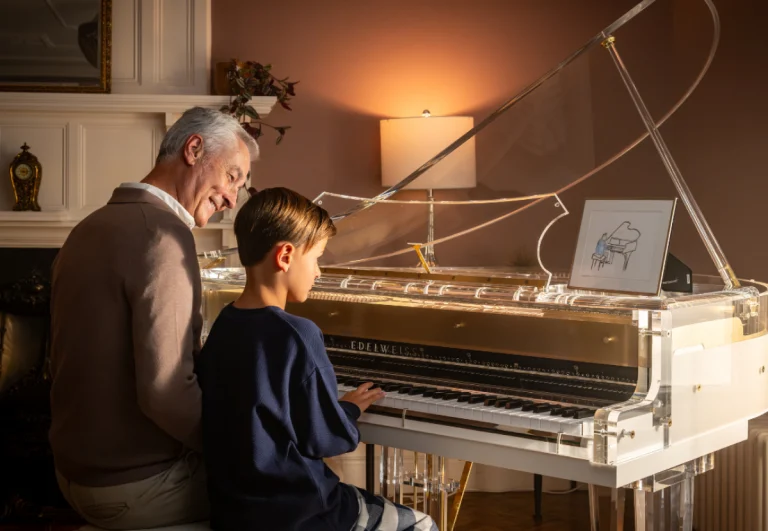
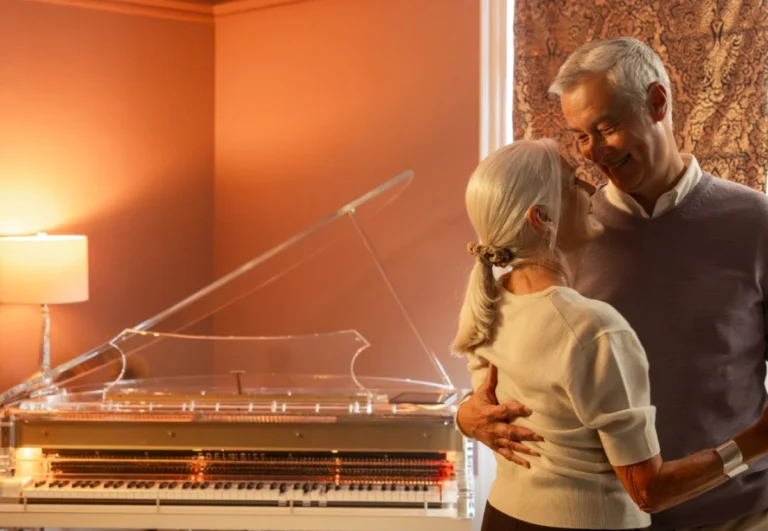
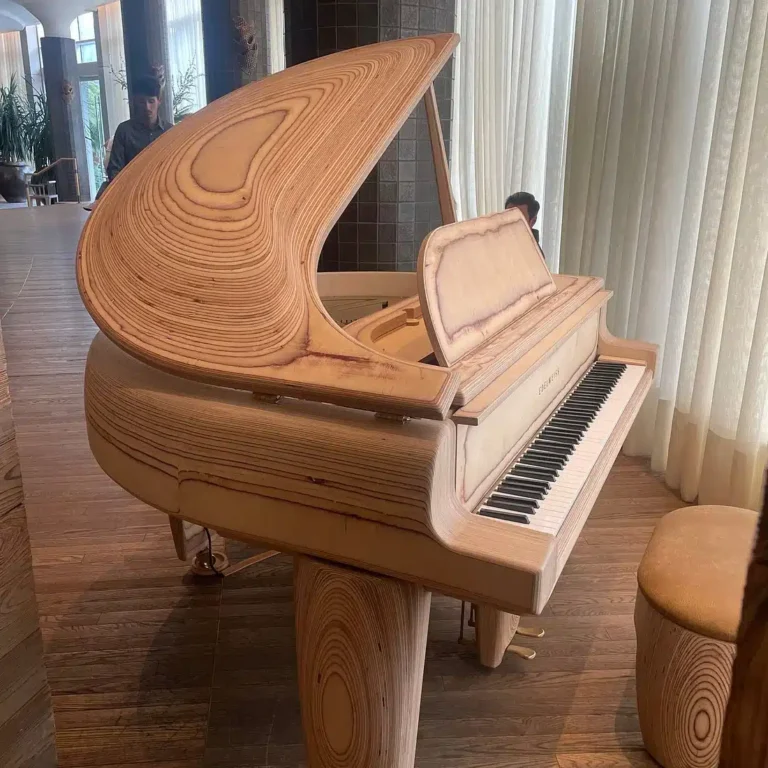
Designed as a bespoke piece in collaboration with Edelweiss Pianos, the instrument reflects the same visual language as the space around it. Soft, sculptural lines echo the curves found throughout the interior. Materials respond to the palette of the room — warm, tactile, grounded in the tones of the California coast.
It is less an object, more a continuation.
From certain angles, it almost dissolves into the surroundings. From others, it becomes a focal point — quietly commanding, without ever feeling dominant.
Design, Music, and Atmosphere
A Reflection of the Coast
Santa Monica brings its own rhythm. The light is different here — softer, more diffuse. The air carries movement. Even indoors, there is a sense of openness that feels connected to the ocean just beyond the streets.
The design of the piano acknowledges that.
There is nothing overly formal about it. No sense of rigidity or tradition imposed onto the space. Instead, it feels relaxed. Considered, but not constrained. The kind of design that responds to its environment rather than competing with it.
When Music Becomes Atmosphere
At certain times of day, the piano shifts from object to experience.
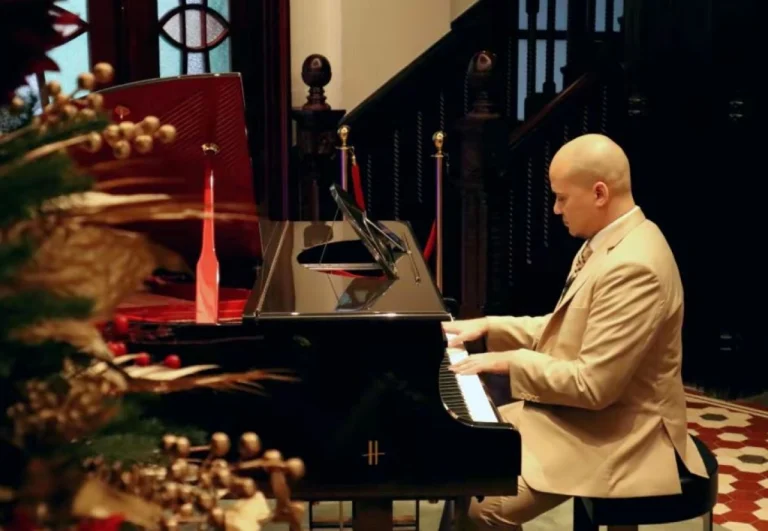
A performance begins, and the room subtly reorganises itself. Conversations soften. Movement slows. The energy of the space recalibrates, not through volume, but through presence. Music fills the gaps between tables, travels through the height of the ceiling, settles into the corners of the room.
It never feels staged.
This is part of the hotel’s approach to atmosphere — music not as entertainment, but as an extension of the environment. Something that enhances what is already there, rather than competing with it.
Even when the piano is not being played, it holds that possibility. A quiet tension. A sense that the room could shift again at any moment.
More Than an Instrument
To describe it simply as a piano misses the point.
It is part of a broader idea — that objects within a space can shape how that space is experienced. That music can exist without announcement. That design can influence behaviour in ways that are almost invisible.
Within the Santa Monica Proper Hotel, the piano becomes a bridge between disciplines. Music, architecture, interior design — all operating together, without hierarchy.
What Stays With You
People rarely leave remembering every detail of a hotel.
But they remember how it felt.
The light in the afternoon. The texture of a chair. The way a room held sound. And sometimes, the presence of something unexpected — a piano that didn’t feel separate from the space, but essential to it.
Not performing for attention.
Just there. Quietly shaping the room.