You Don’t Expect to Find a Piano Like This
Most people walk into Harrods with a plan. A department in mind. A reason for being there.
Very few arrive expecting to stop in front of a piano.
And certainly not one like this.
Somewhere within the store, between the familiar rhythm of luxury retail, you come across something that feels slightly out of place — not because it doesn’t belong, but because it doesn’t behave like anything else around it. A piano, yes. But not one you recognise immediately.
It draws attention in a different way.
More Than a Traditional Piano Display
Harrods has always been a place where objects are presented at their best. Lighting, positioning, space — everything is considered.
But pianos are rarely part of that conversation.
When you encounter them here, it doesn’t feel like a standard retail display. There is no expectation that you sit down and play. No sense that they are waiting to be tested in the traditional way.
Instead, they are there to be observed.
From a distance at first. Then a little closer.
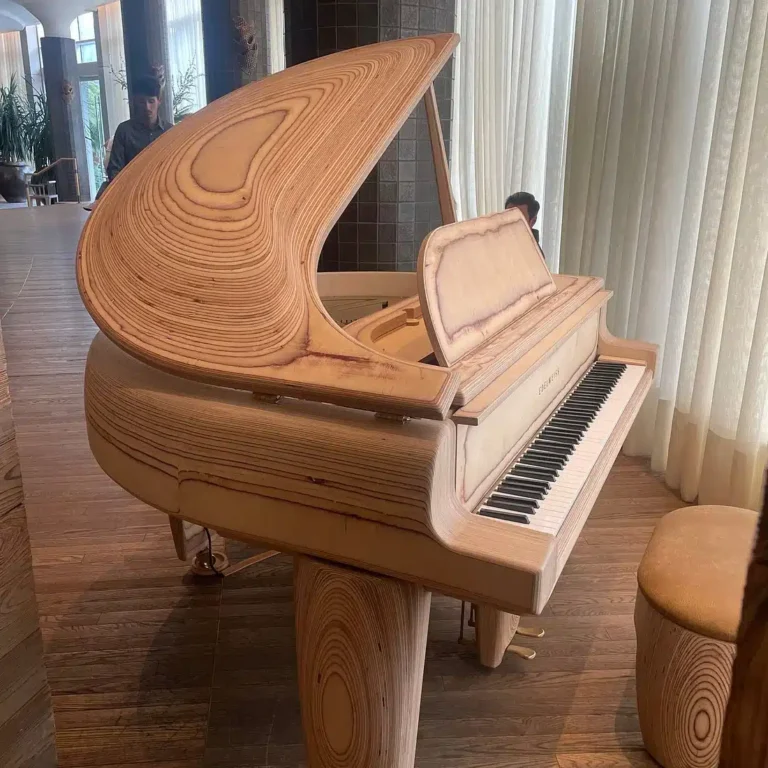
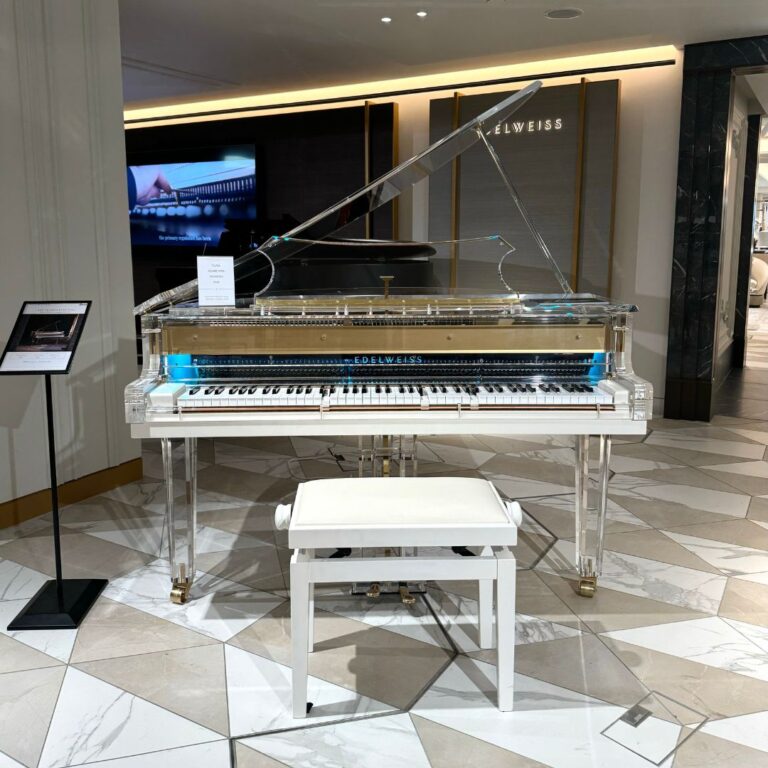
You begin to notice that no two are quite the same. One catches the light differently — almost transparent, revealing more than you expect from a grand piano. Another carries a softer glow, its surface shifting subtly as you move past it. Further along, something more classical appears, but even that feels reinterpreted rather than traditional.
It quickly becomes clear: this is not a single piano on display. It’s a collection of ideas.
The Moment It Becomes Something Else
And then, without much warning, it begins.
A single movement. A key lifting slightly. Then another.
It takes a second to register what you’re seeing. There is no one seated at the piano. No performer. And yet, the music is unmistakably real.
This is where curiosity turns into something stronger.
People pause. Not dramatically — just enough to take a second look. A few steps closer. A change in pace. It’s not a performance in the traditional sense, but it creates the same reaction.
A quiet kind of attention.
The Edelweiss Collection in Harrods
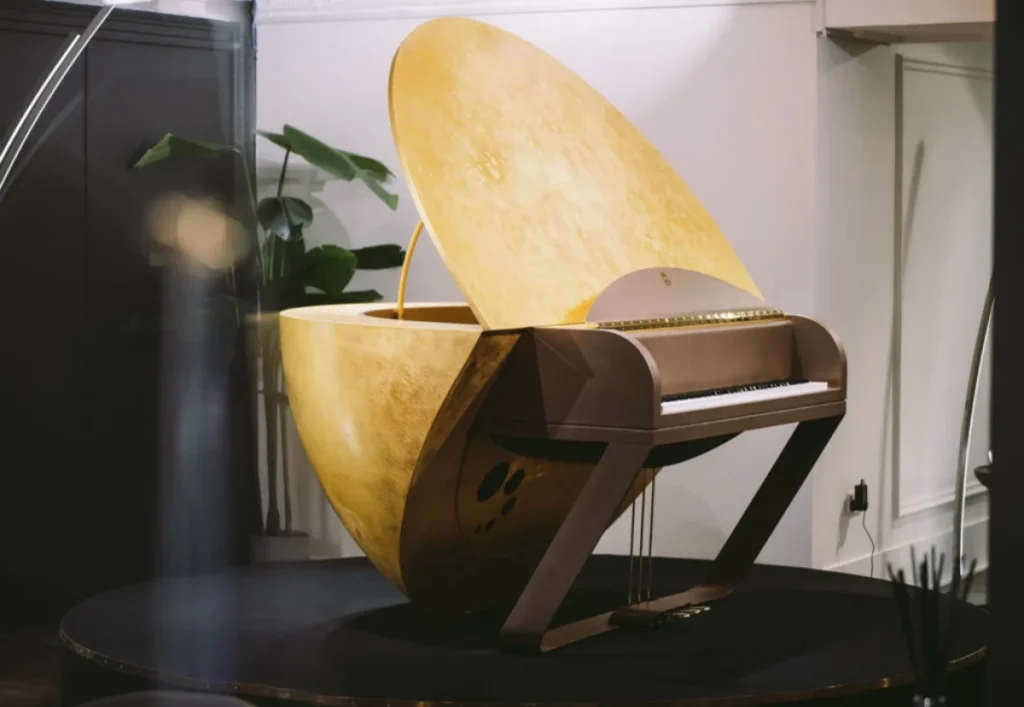
This is where Edelweiss Pianos begins to reveal itself more fully.
The pianos on display are not variations of the same idea. Each one carries its own identity.
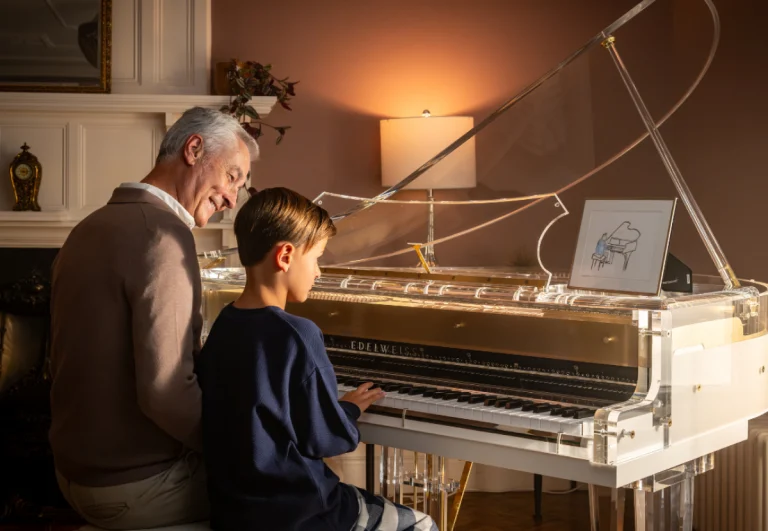
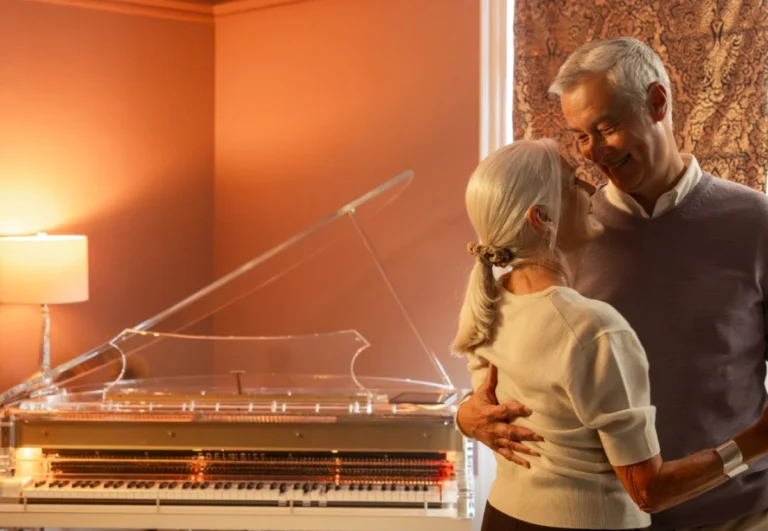
There is the Transparent S132 — compact, almost unexpected in scale, yet visually striking. Its transparent body allows light to pass through it, shifting as you move around it, while subtle colour-changing elements give it a presence that feels closer to an installation than a traditional instrument.
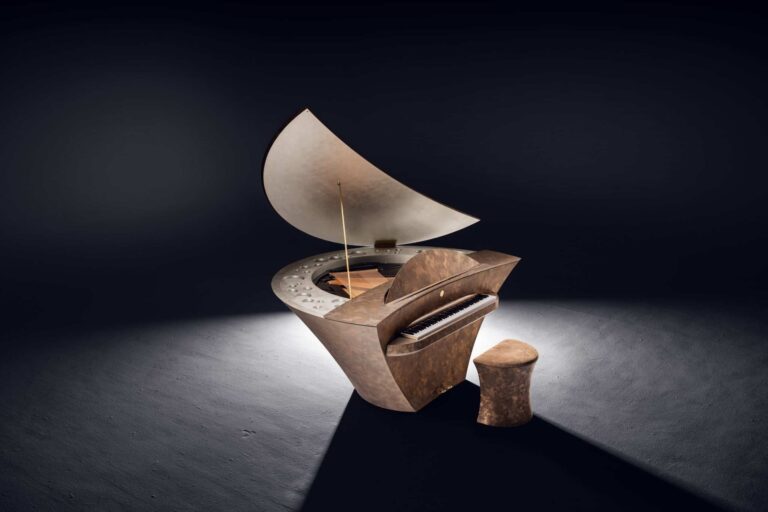
Nearby, the Solis takes a completely different approach. Sculptural and luminous, its finish reflects light with a quiet intensity, giving it the feel of something crafted as much for visual impact as for sound.
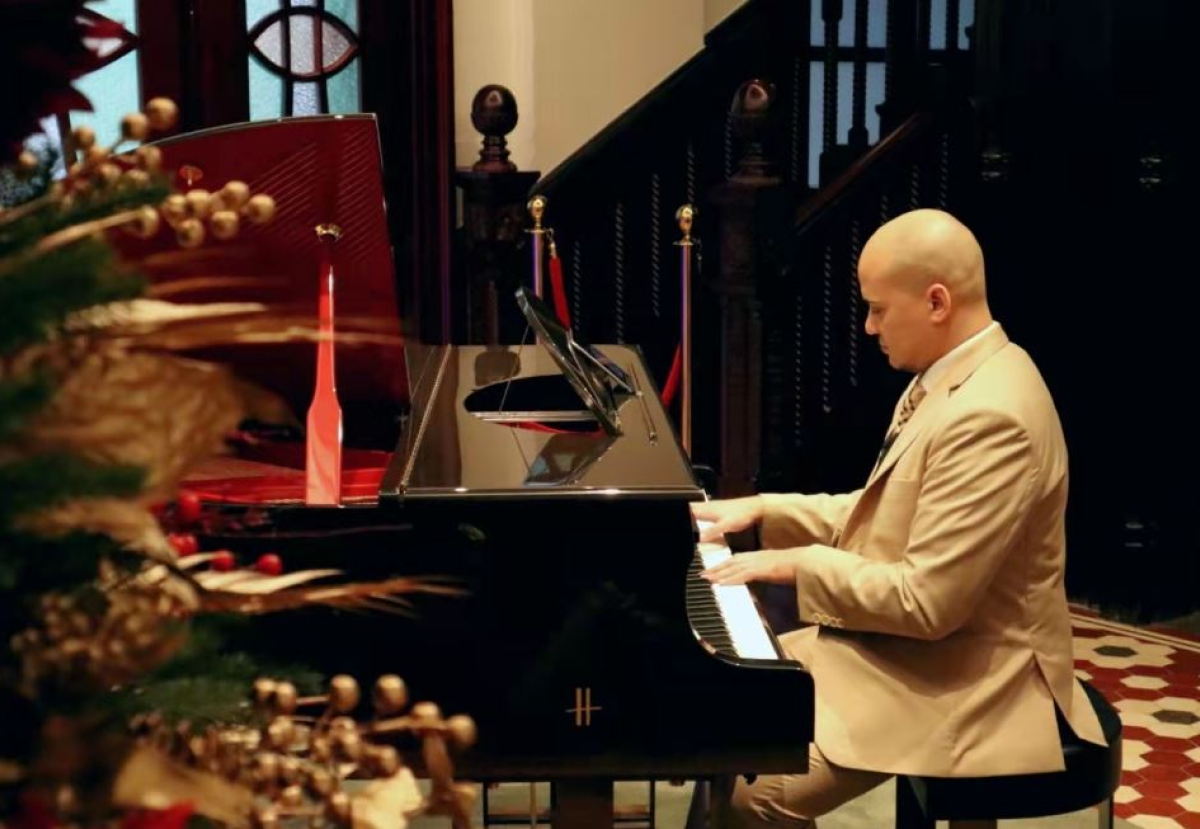
Then there is The Original — a design that feels more grounded, yet no less considered. Clean lines, balanced proportions, and a sense of refinement that hints at tradition without being constrained by it.
In contrast, the Liquid Moda introduces something more expressive. The surface feels almost fluid, with a finish that changes character depending on how light moves across it.
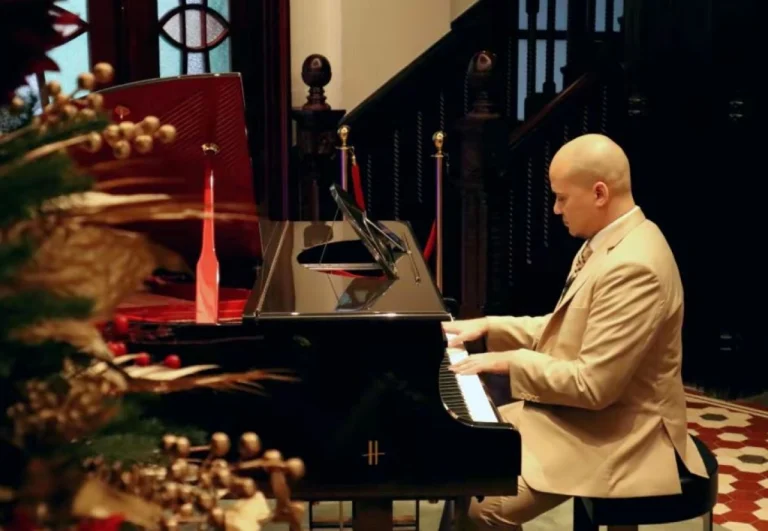
And finally, the Classic Flügel — a familiar silhouette, but sharpened. The deep matte tones and subtle contrast give it a more contemporary edge.
Each one asks to be seen differently.
Where Art and Music Begin to Blur
What makes these pianos stand out inside Harrods is not just the sound.
It’s the way they sit within the environment.
Surrounded by fashion, jewellery, and design objects, the piano begins to read differently. It is no longer just an instrument. It becomes part of a broader conversation about craftsmanship, form, and presence.
You start to look at them the way you would a piece of art.
The finishes, the silhouettes, the way each one occupies space in its own way. Even without playing, they hold attention in a way that feels closer to sculpture than performance
A Different Kind of Interaction
Most instruments ask to be played.
These do something slightly different.
They ask to be experienced.
Visitors don’t approach with the intention of using them. Instead, they observe. They listen. They take a moment out of an otherwise fast-moving environment to engage with something that feels slower, more deliberate.
It’s a subtle shift, but a noticeable one.
You don’t need to understand how it works to appreciate it. In fact, not knowing is part of the appeal.
Designing Something Personal
What adds another layer to the experience is the realisation that these pianos are not fixed ideas.
Within the Edelweiss concession, there is the opportunity to explore a configurator — a way of shaping a piano beyond what is on display. Colours, finishes, materials, details. The process feels closer to designing a piece of furniture or commissioning an artwork than selecting a traditional instrument.
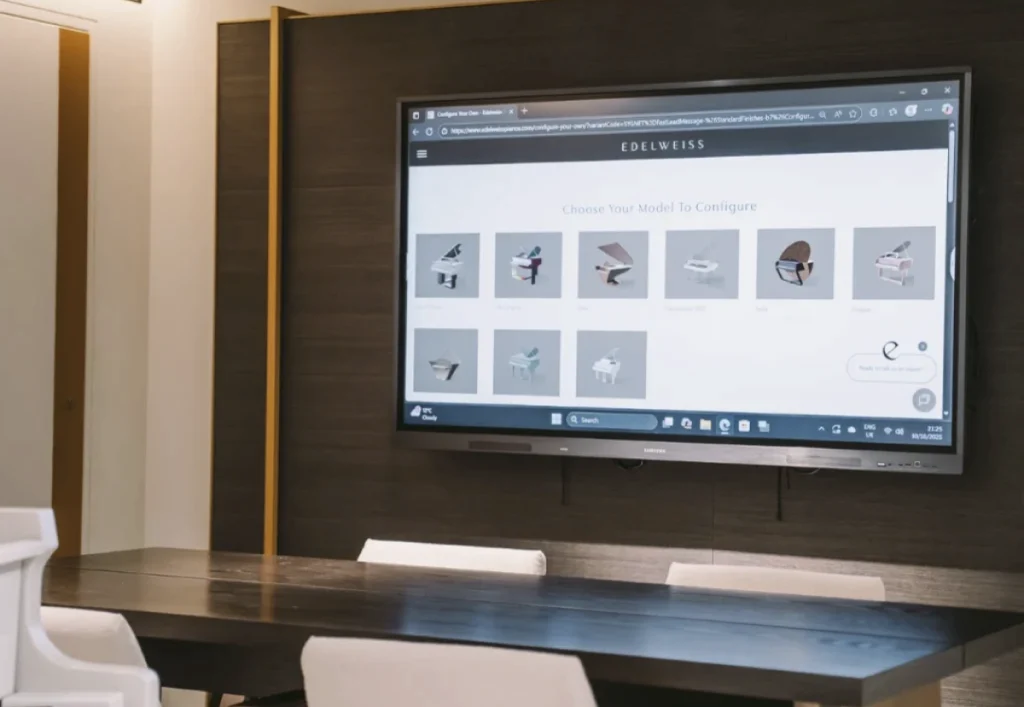
The pianos in front of you become reference points rather than final versions.
It shifts the perspective slightly. You’re no longer just looking at what exists, but what could be created.
A Discovery You Didn’t Plan
What makes the experience memorable is how unplanned it feels.
You don’t come to Harrods specifically to see a piano. But you leave remembering them.
Not necessarily the technical details, or even the exact piece of music that was playing. But the moment itself — that brief pause, the slight confusion, the curiosity that followed.
It sits alongside the other impressions of the day, but it feels different.
More unexpected.
Why It Stays With You
In a place filled with objects designed to impress, it’s often the ones that behave differently that stay with you.
A piano playing without a performer.
Keys moving with intention.
Forms that feel closer to sculpture than instrument.
It doesn’t interrupt your visit to Harrods. It becomes part of it.
A small moment of curiosity, somewhere between art and music, that quietly follows you out of the building.