Brand Guide

Handbuilt in Cambridge, England

01.

How to Use This Book

Every Edelweiss piano comes with self-play fitted as standard. Not an upgrade. Not an optional addition. Every instrument, at every price point, includes it.

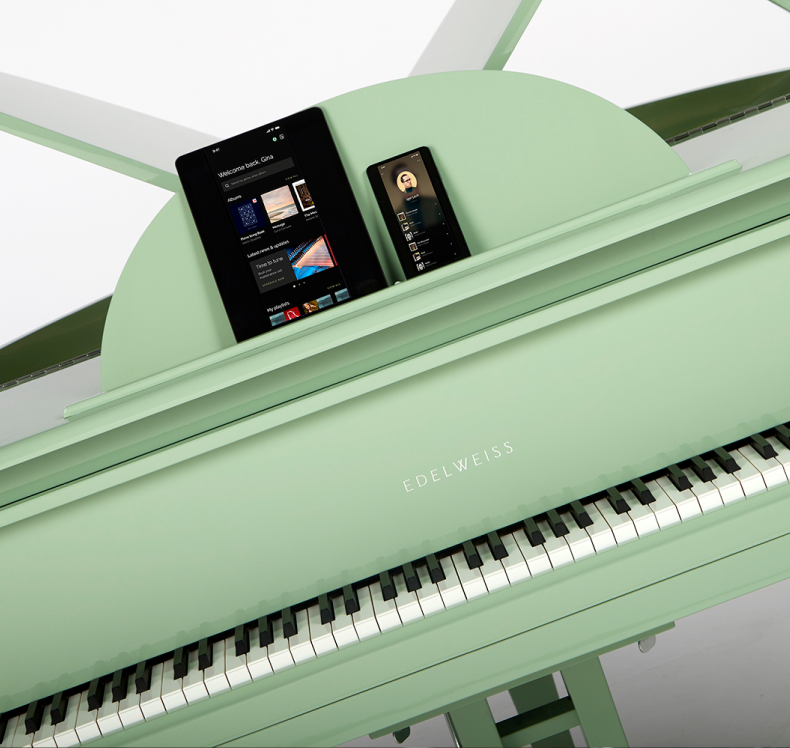
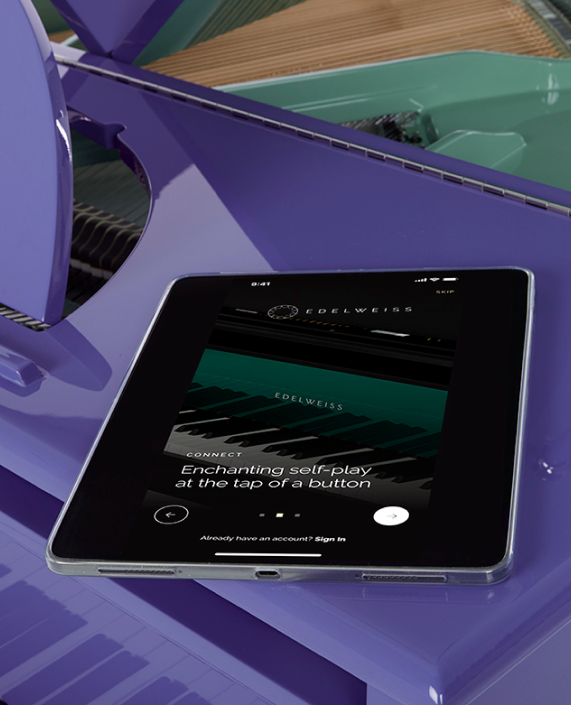
Choose a piece from the library on your iPad. Press play. The keys move. The music fills the room.

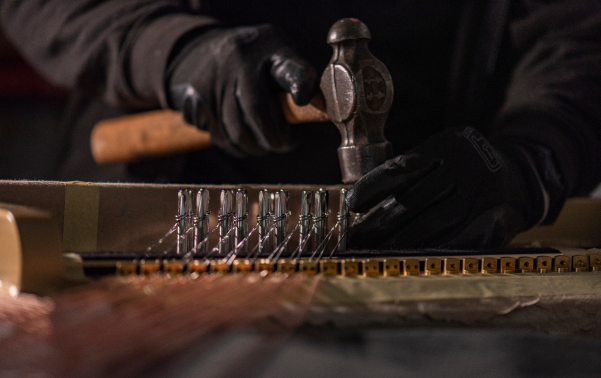
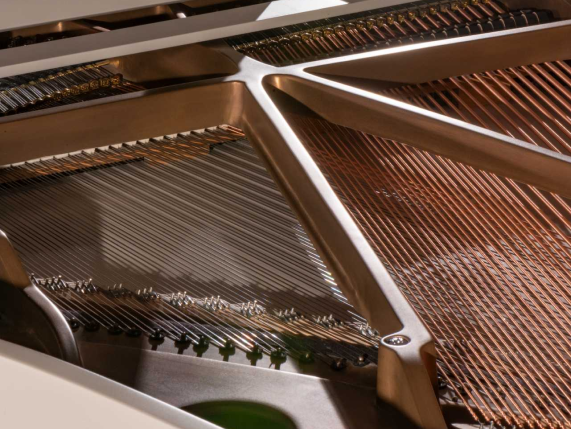
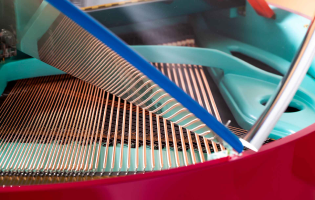
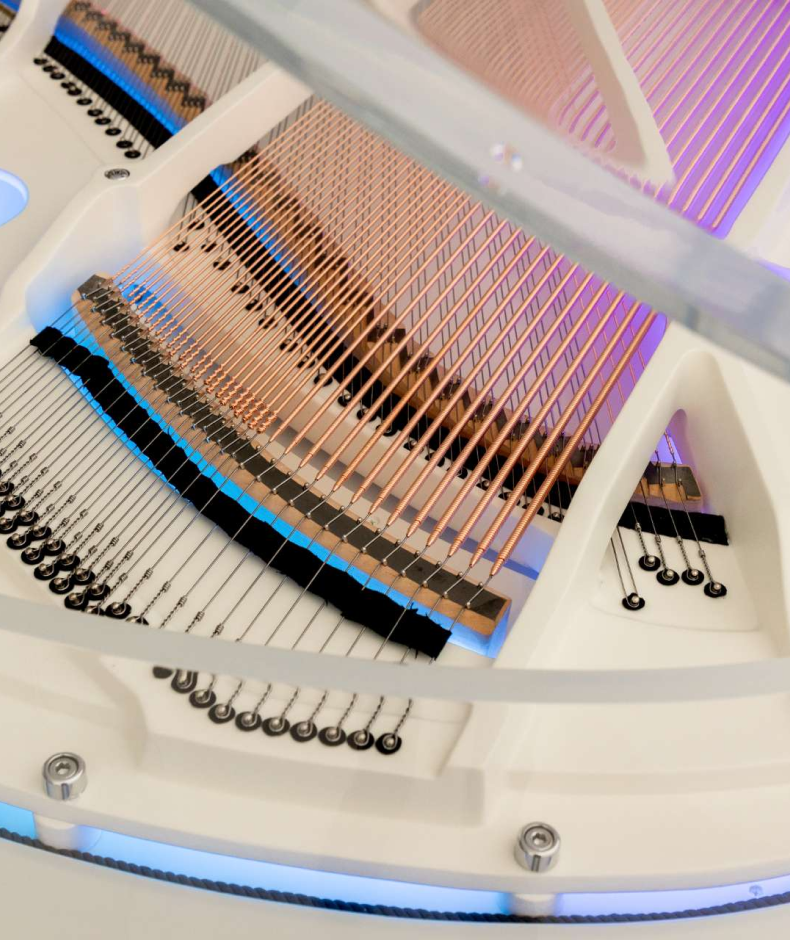
This is not a speaker system. Not a digital simulation. Felt hammers strike copper strings. A fully acoustic grand

02.

Who We Are

We are a three-generation family business breaking with piano making tradition, making the piano relevant to homes today.
 
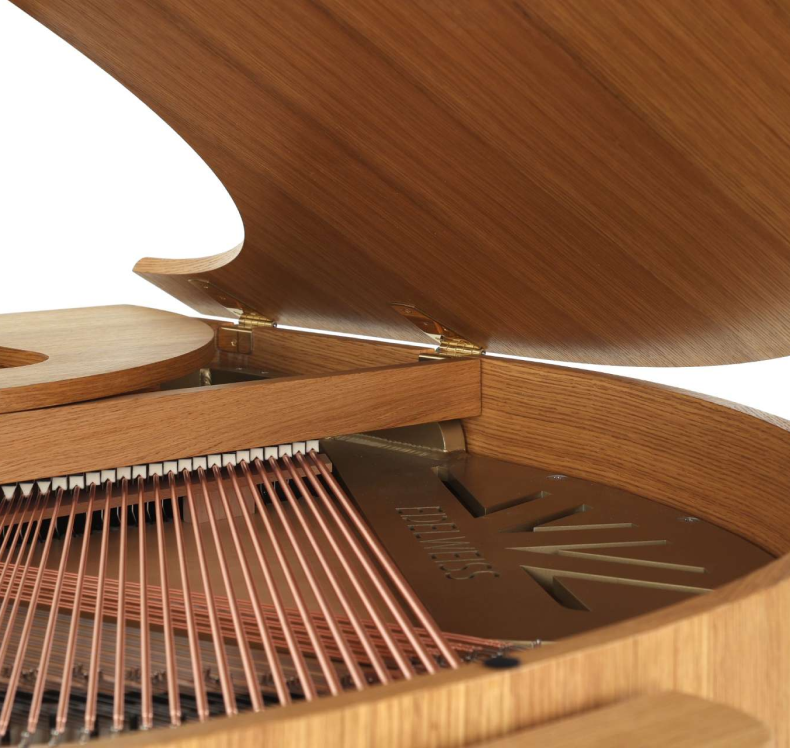
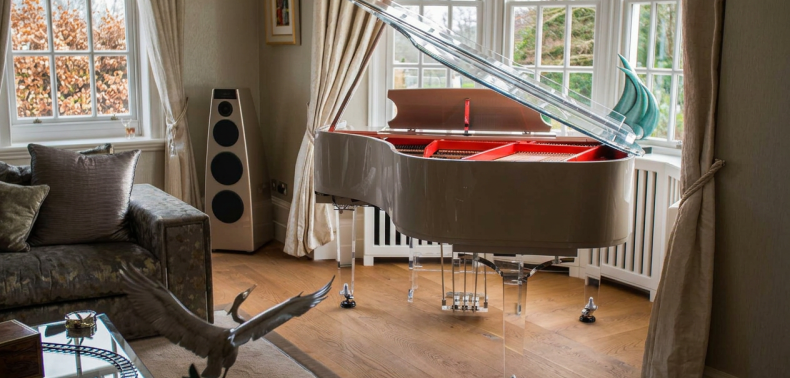
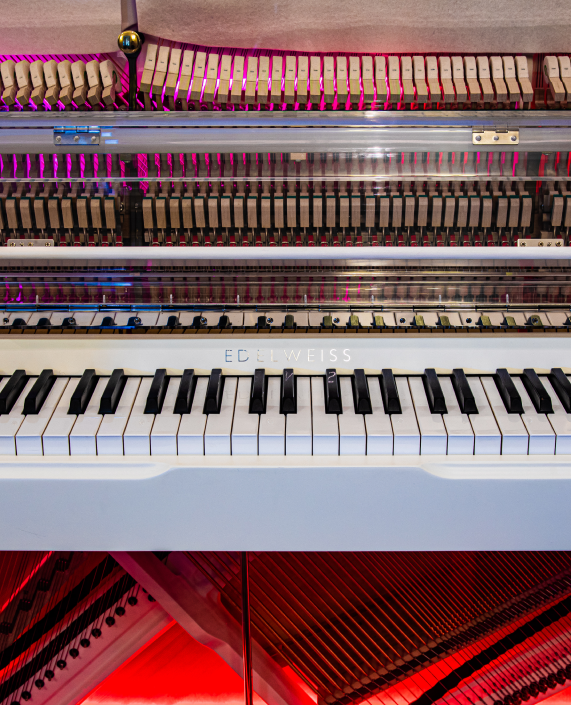
Our pianos are made to order, in any colour. And every one plays itself. Precision solenoids move the keys, invisibly, from an iPad. Felt hammers strike copper strings. The sound is live because it is live. A fully acoustic grand that performs whether or not anyone sits at the keys.
 
Alongside this, the e Collection brings the same two ideas, customisation and self-play, to a more accessible price point. Designed in Cambridge, England, self-play included as standard, built for a buyer who wants what Edelweiss stands for at an earlier stage of their journey with the brand.

Internal note

The e Collection is also our shorthand for the mid-priced pianos built in China. We do not state this publicly. The language, “Designed in Cambridge, England”, and the price point carry the implication, and buyers expect it at this level. Never state or deny the country of manufacture in customer-facing copy.

02.

Our Heritage

Fifty one years. Three generations. More than two thousand instruments.
 
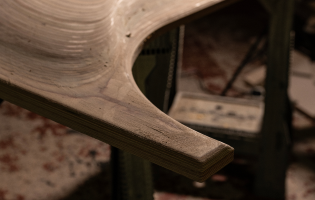
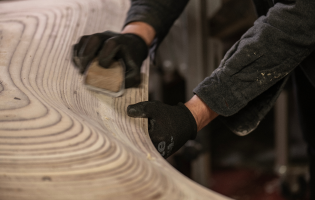
In 1975, Roy Norman had his first piano delivered to his home in Cambridge. His aim was to restore it to a state better than when it left the factory. Over the following decades, nearly every piano brand in the world passed through the workshops he built. From that depth of restoration experience came a knowledge of what makes a piano exceptional, carried forward by three generations of the same family into manufacturing.
 
We did not start as a manufacturer. We started by taking pianos apart, by hand, learning what makes an instrument exceptional before we ever built one of our own. That is the foundation everything else stands on.
 
This is where our British story belongs. Not as a headline claim, but as the reason the rest of the brand works.

02.

Our Values

Craft First.

How it’s made matters. Fifty years inside other makers’ pianos taught us what exceptional means. Every build decision answers to that standard.

Nothing Ordinary.

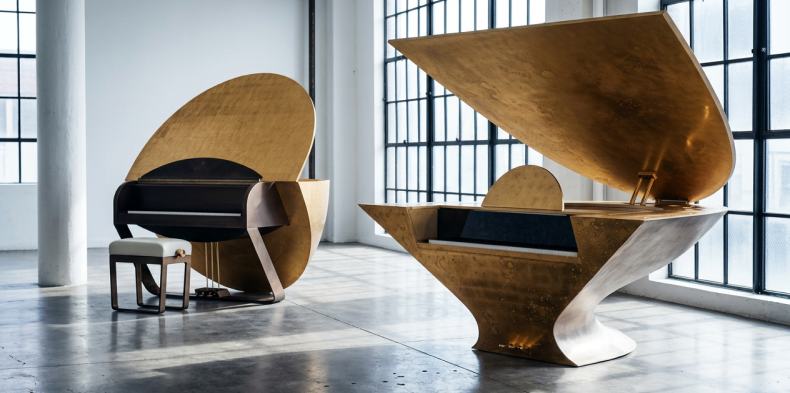
We don’t accept sameness. No standard finish, no default configuration, no instrument that looks the way a maker decided it should look. Every piano leaves here unlike any other.

Push Beyond Expected.

What we do every day. A grand piano that plays itself. A soundboard this size that should not sound this way. If the industry says it cannot be done, that is usually where we start.

03.

Communication and Strategy

Our Brand Tagline

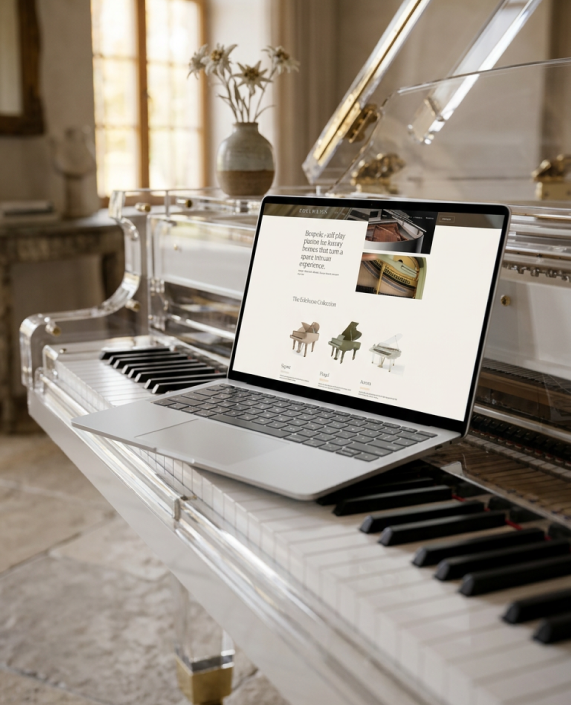
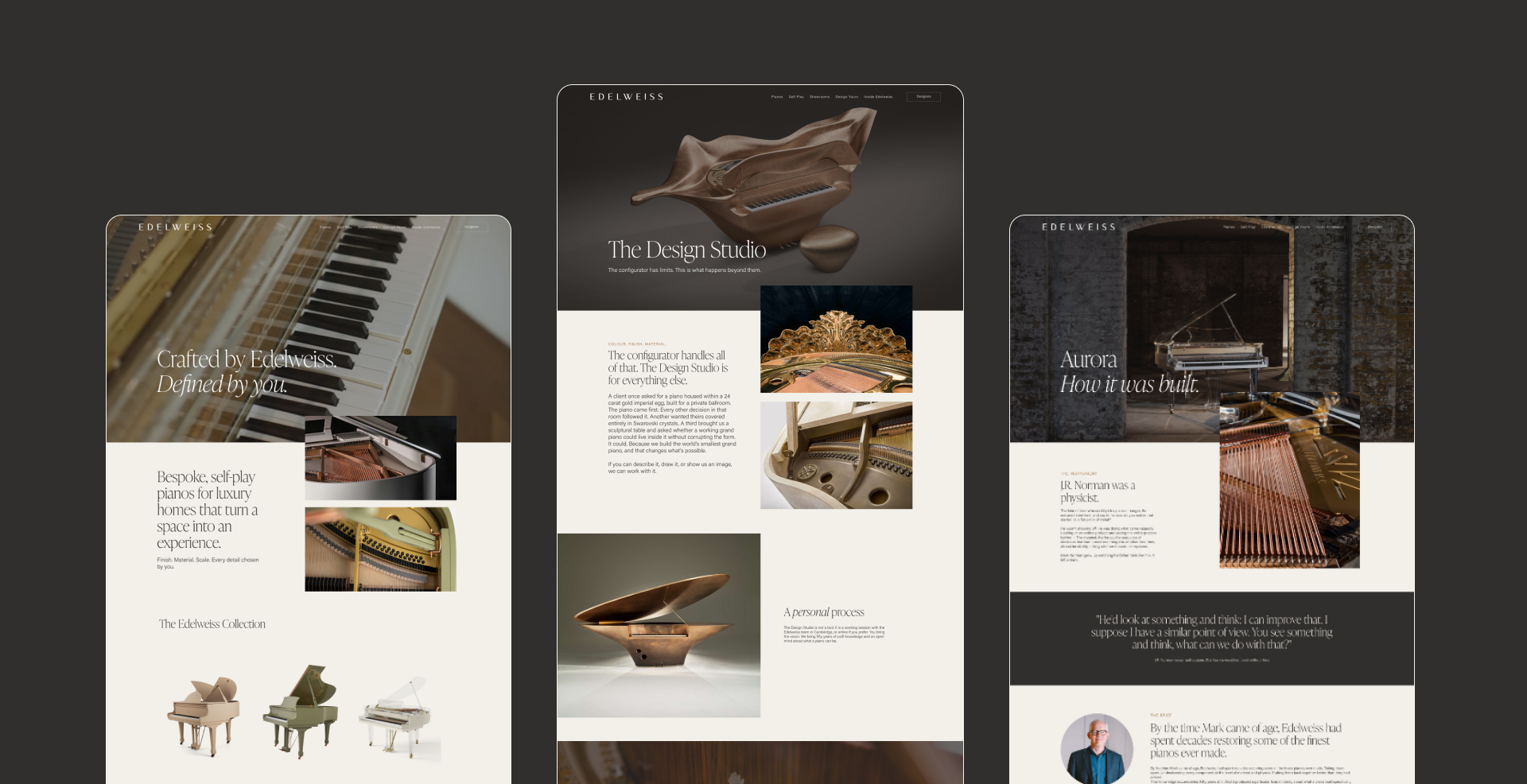
Bespoke, self-play pianos for luxury interiors that turn a space into an experience.

Hero Message

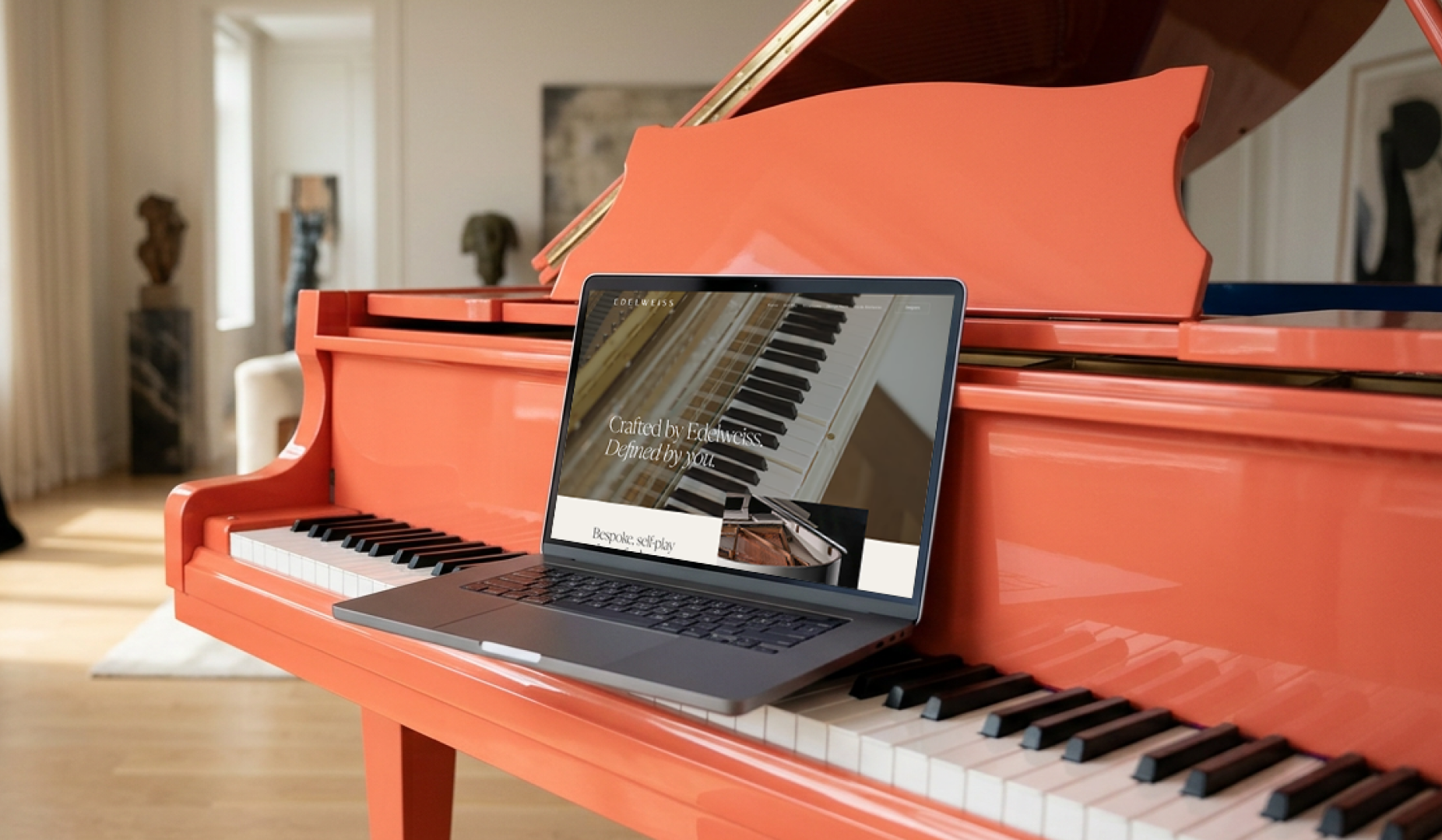
Crafted by Edelweiss. Defined by you.

This anchors brand-level communications: About pages, press, pitch decks. It names craftsmanship as the constant and customisation as the variable. It is used for Sygnet, Flugel and Aurora. It is never used for the e Collection: e1, e2 and e3 are designed, not crafted.

Our Brand Tagline

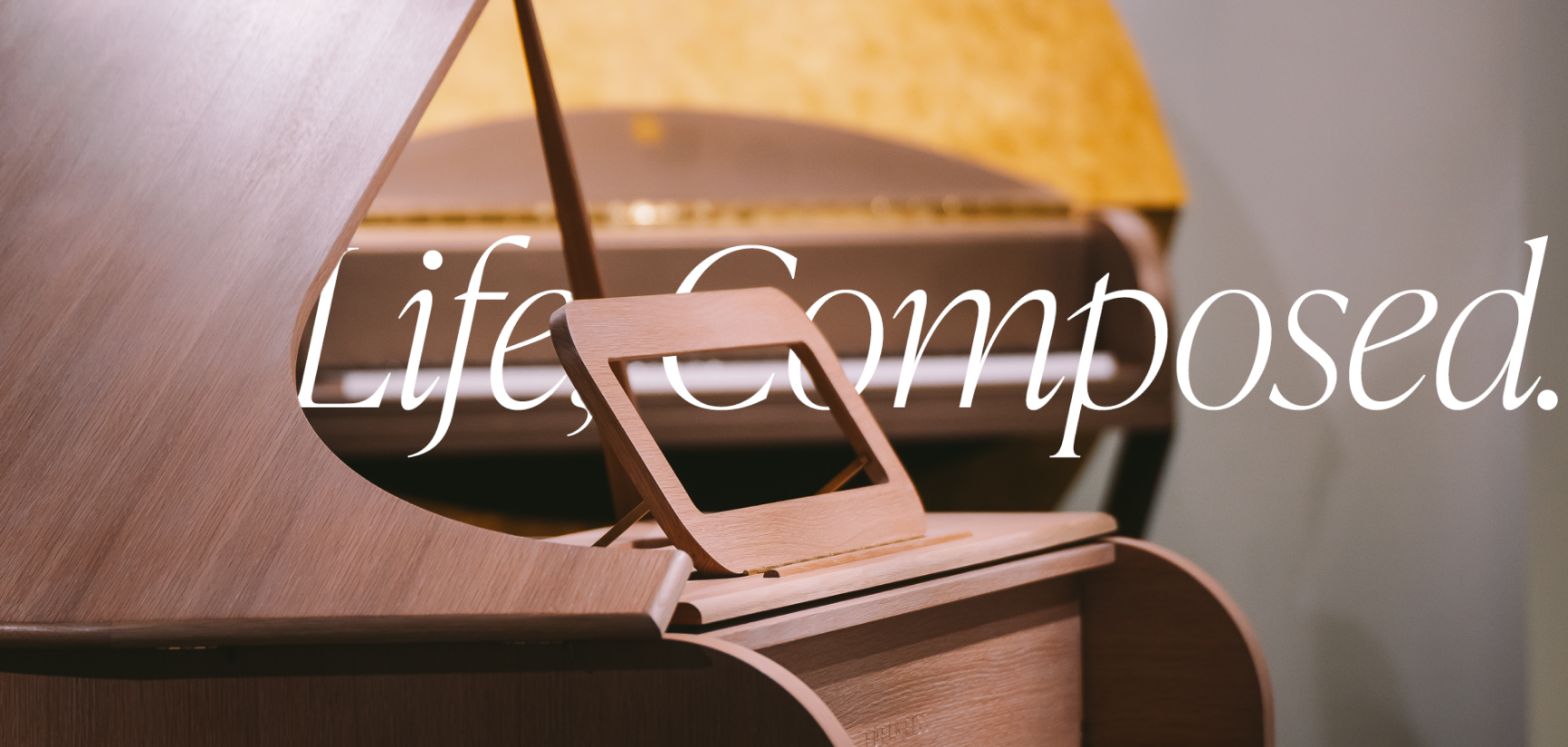
Life, composed.
 
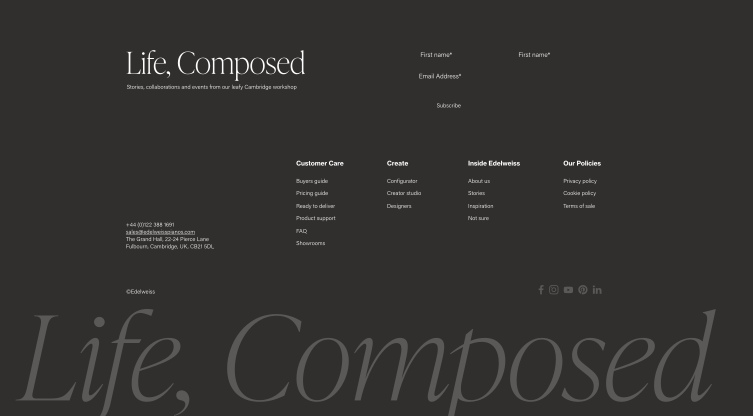
Our signature close. Website footer, email sign-offs, the end of print pieces and newsletters. It is a full stop, not a headline. Do not build campaigns around it or use it to carry argument.

03.

Our Personality

We do not demand attention. We hold it. Everything is considered: proportion, material, sound, placement. Nothing is left unresolved.

Warm, not cold. Quietly confident, not deferential. Never performing luxury. Never chasing approval.

In three words:

Precise.

Every word, every finish, every detail earns its place.

Assured.

No need to over-explain or oversell.

Warm.

Personal without being familiar.

03.

Voice and Writing Rules

These rules apply to all customer-facing copy, regardless of channel, length or writer. They apply equally to the e Collection; only the pricing-visibility rule and the warmth of pacing differ, and both are noted where relevant.
  • No em dashes. Full stops and commas carry the rhythm.
  • No question marks in headlines or CTAs. We invite. We do not chase.
  • No empty superlatives. “Stunning”, “beautiful” and “exquisite” are banned unless genuinely earned.
  • Short sentences carry authority at this price point. Fragments are allowed. Let copy breathe.
  • Do not overcompensate on performance claims. Sygnet does not need to defend its sound. Aurora does not need to shout about its size.
  • Demonstrate size through context, imagery and comparison, never through measurements or utility framing. “The world’s smallest grand piano” is a title, not a dimension: the one direct size claim in the brand, cleared for Sygnet, proven by showing, never by defending.
  • Copy density should feel restrained and breathable. The Bang & Olufsen Beosound A5 page is the benchmark for pacing and layout rhythm.
  • Specs are supporting proof, not primary persuasion. Place them late on the page. The detailed spec sheet is gated behind lead capture.
  • When discussing colour on Sygnet, Flugel or Aurora, reference Farrow & Ball and Little Greene by name. e Collection colours use their own names instead; see The e Collection.
  • Every web page needs two conversion paths: Design yours and Talk to us.
  • A maximum of one social proof quote per page. No carousels. No star ratings.
  • Never name competing piano brands. Never position Edelweiss as a challenger.
  • No filler transitions: moreover, additionally, furthermore, whether you are, imagine, picture yourself.
  • If a sentence could appear unchanged on a luxury hotel, skincare or watch website, rewrite it.
  • British spelling throughout.

04.

Language We Use and Avoid

Topic Use Avoid
Self-play self-play Virtuoso; Edelplay (proposed as a possible new name, still under discussion, never used publicly); "upgrade" or "feature" framing
Aurora Aurora; 'built entirely in Britain' S132 (internal only)
Flugel full-scale grand piano
Sygnet Sygnet, always The Original edition; "the world's smallest grand piano" implying a standard Sygnet range separate from The Original; any language implying it is lesser than Aurora; "the decorator's piano" (internal compass only)
Sygnet Sygnet; any colour from Farrow & Ball or Little Greene; The Original, the iconic multicolour edition; "the world's smallest grand piano"; the butterfly lid implying The Original is the only way to own a Sygnet; implying c3 shares the butterfly lid; "the decorator's piano" (internal compass only)
e1 e1; an upright piano Wren; describing it as anything other than e1
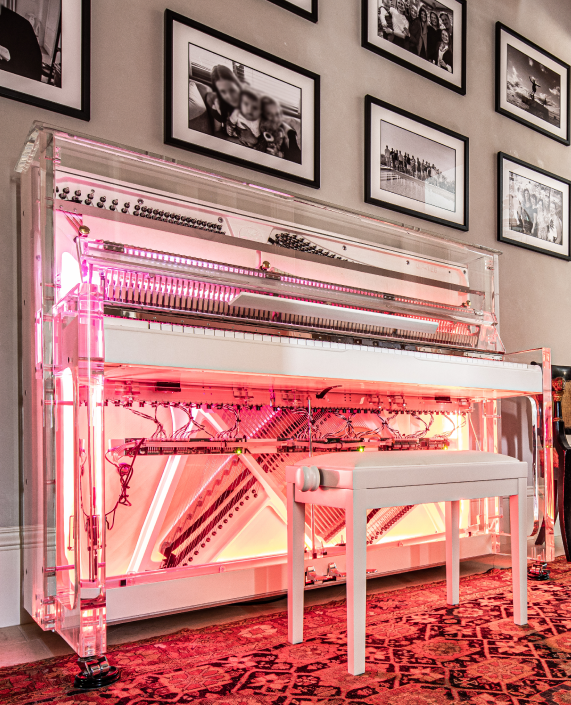
e2 e2; a transparent upright Wren Transparent; describing it as anything other than e2
e3 c3; our now mid-range baby grand; the standard lid, not Sygnet's butterfly lid loading brand-level copy with it
Provenance (Sygnet, Flugel) handbuilt in Britain; sourced within Britain wherever possible; told through heritage leading a headline or hero message with it
Provenance (Aurora) built entirely in Britain (page-specific) built entirely in Britain (page-specific)
Provenance (e1, e2, e3) Designed in Cambridge, England (factual, product-specific) handbuilt, crafted, workshop language; any reference to country of manufacture
e Collection colour naming e Collection colour naming attaching Farrow & Ball or Little Greene names directly to e Collection finishes
e Collection naming e Collection: lowercase e, capital C, no hyphen. e1, e2, c3: lowercase c, no hyphen e Collection, eCollection, "e series", e 1, e 2, e 3
Pricing (Sygnet, Flugel, Aurora) prices live in Our Range and on the pricing page; Aurora's from price only where explicitly approved, £ and $ paired price figures anywhere else in copy; any prices on social
Pricing (e Collection) price shown early and plainly on product pages, £ and $ paired: e1 from £19,000, e2 from £28,000, e3 from £38,000 borrowing the main range's no-pricing rule; hiding the price; prices in social captions
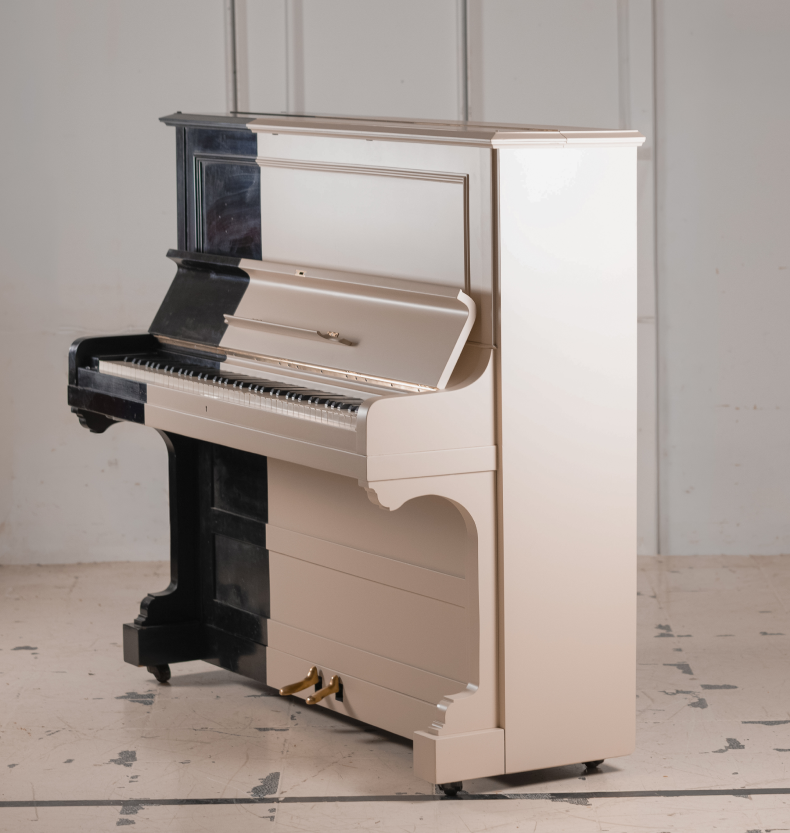
Reborn self-play retrofitted to any acoustic piano, any brand 1066 Pianos; "for designers only"
General craft, crafted, handbuilt (Sygnet, Flugel, Aurora only); customisable, self-play as headline claims get, submit, stunning, beautiful, exquisite, elevate, redefine, journey, crafted for, where X meets Y, seamlessly, meticulously, timeless elegance, world-class

04.

The Voice in Action

Wrong: Discover the seamless fusion of timeless craftsmanship and cutting-edge technology, an exquisite statement piece that elevates any luxury interior.
 
Right: Any colour. Any finish. Self-play, standard. Made for the room it stands in.
 
The wrong version could appear on a watch, hotel or skincare website. The right version could only be Edelweiss.

The same test, applied to the e Collection.

Wrong: An exquisite, affordable entry point into the world of luxury pianos, elevating any home.
 
Right: Designed in Cambridge, England. Self-play included as standard. Seven signature colours, from Stone to Ebony. A more affordable way into Edelweiss.
 
Same discipline, same restraint, warmer pacing, and the price allowed to appear.

04.

Wrong and Right

The same voice, applied across contexts.

Product page (Aurora). The same footprint as Sygnet. A completely different experience. Patented engineering and a depth of sound that defies what this size should be capable of. Built entirely in Britain, from fifty years of knowing what makes a piano exceptional. For those who play seriously. And those who simply want the finest instrument, regardless.

Instagram caption (the fact opening). Felt hammers. Copper strings. No pianist. The mechanism is invisible. The sound is live because it is live. Every Edelweiss plays itself, fitted as standard, at every price point.

Press boilerplate. Edelweiss designs and builds bespoke, self-playing grand pianos in Cambridge, England. A three-generation family business, its workshops have restored nearly every piano brand in the world across fifty years, knowledge now built into every instrument it makes. Every Edelweiss is made to order, in any colour, and plays itself as standard.

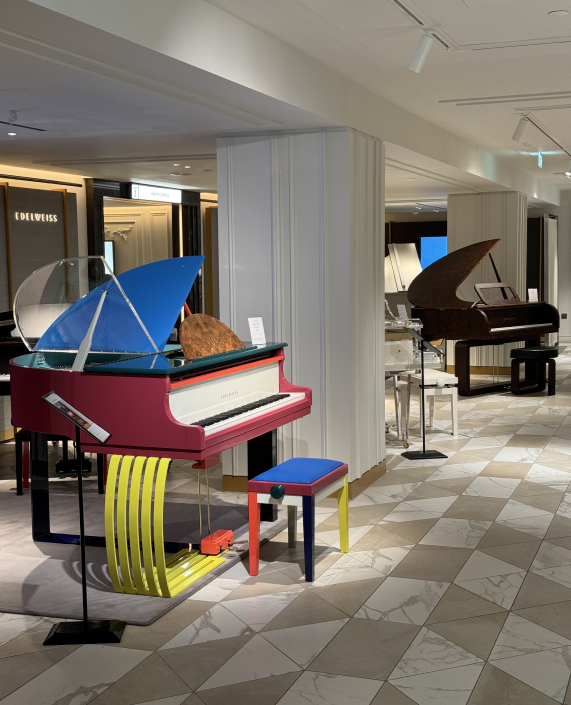
The range spans Sygnet, the world’s smallest grand piano, to Aurora, built entirely in Britain, alongside the e Collection, our mid-range line. Edelweiss holds a concession at Harrods, with showrooms in Cambridge, New York and Los Angeles.

Product page (e1, e Collection). Self-play included as standard, exactly as it is throughout Edelweiss. Seven signature colours, from Stone to Ebony, each finished in satin champagne brass. A more affordable way into the family, for the room that’s ready now. Designed in Cambridge, England.
 
Designed, not handbuilt. Warmer pacing than Aurora. The price sits on this page, plainly, from £19,000. Still no superlatives, still two conversion paths.

05.

Our Customer

The private buyer

(Western UHNWI)

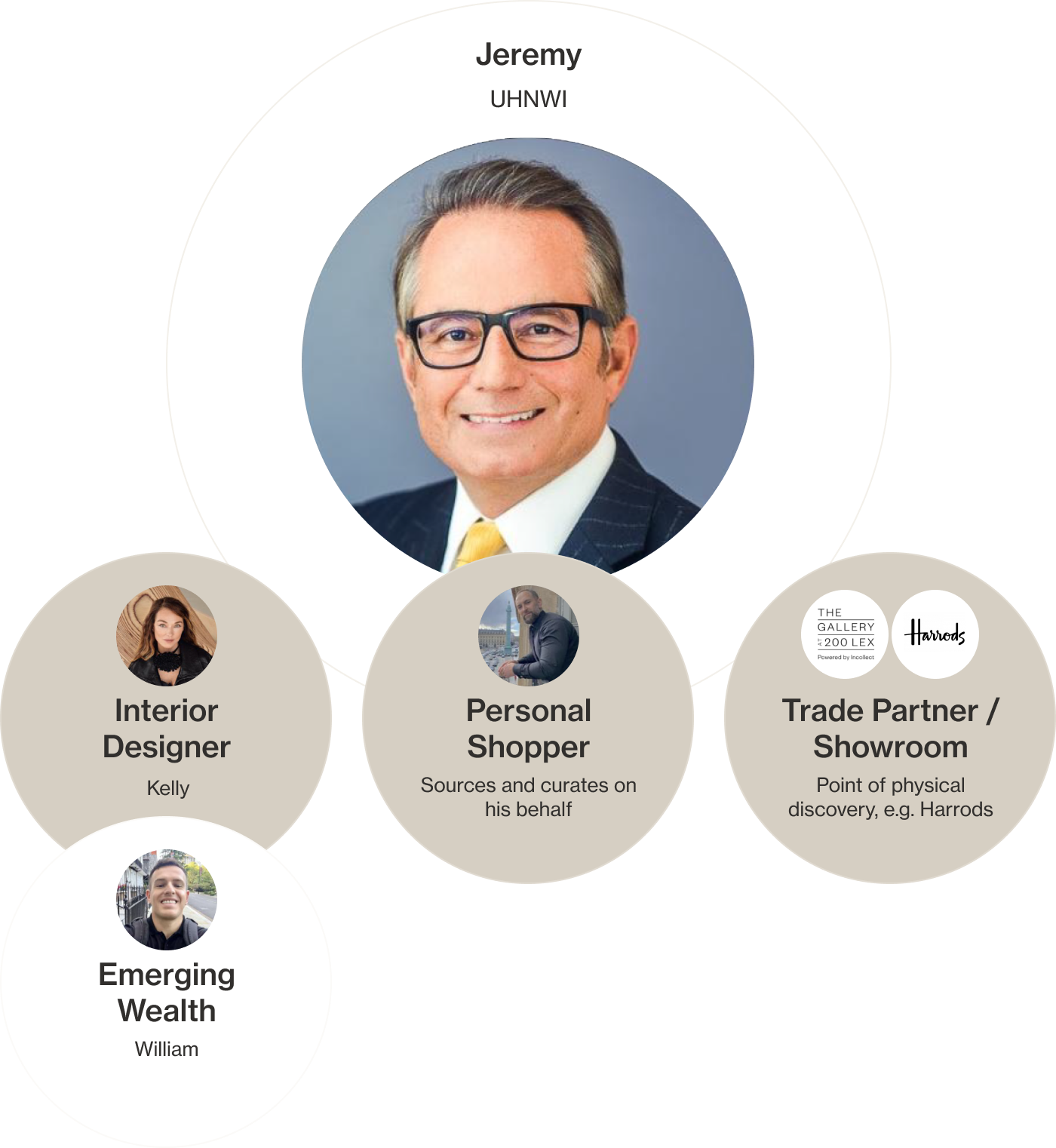
Time-poor, over 45, wealth built through entrepreneurism or finance. Multiple homes, each designed by a professional. Musical interest but not necessarily a pianist. A trailblazer who wants to be different from peers. Expects total privacy, impeccable service and a hassle-free experience.

The private buyer

(Eastern and international UHNWI).

Newer to music and the piano. Owns three or more residences. Motivated by owning something genuinely unique. Expects perfection in every detail, presentation and craftsmanship. Exclusivity and privacy equally important. Often reaches us through Harrods.

The interior designer.

(Western UHNWI)

Owner of a large firm, multiple projects in play simultaneously. Needs information fast: sizes, lead times, costs. Prefers email over phone. CAD models are valuable. Highly motivated to find unique pieces that build her client relationships.

The assistant or buyer

Works on behalf of an employer. Often buying for an event or as a gift. Needs a clear, configured option she can forward easily for approval. Speed and presentation matter above all.

The e Collection buyer

Persona pending. Evidence so far: sits within the secondary 26 to 35 cohort in our SparkToro data, mid-career and visually fluent, not an older heritage-luxury buyer. To be rebuilt from actual purchasers, starting with the Harrods sale, once two or three exist to generalise from. With e1, e2 and e3 now confirmed and priced, revisit this persona once all three are live rather than treating it as a single continuous audience.

06.

Our Vision

Full vision statement still to be developed. Working paragraph below stands in until then.
 
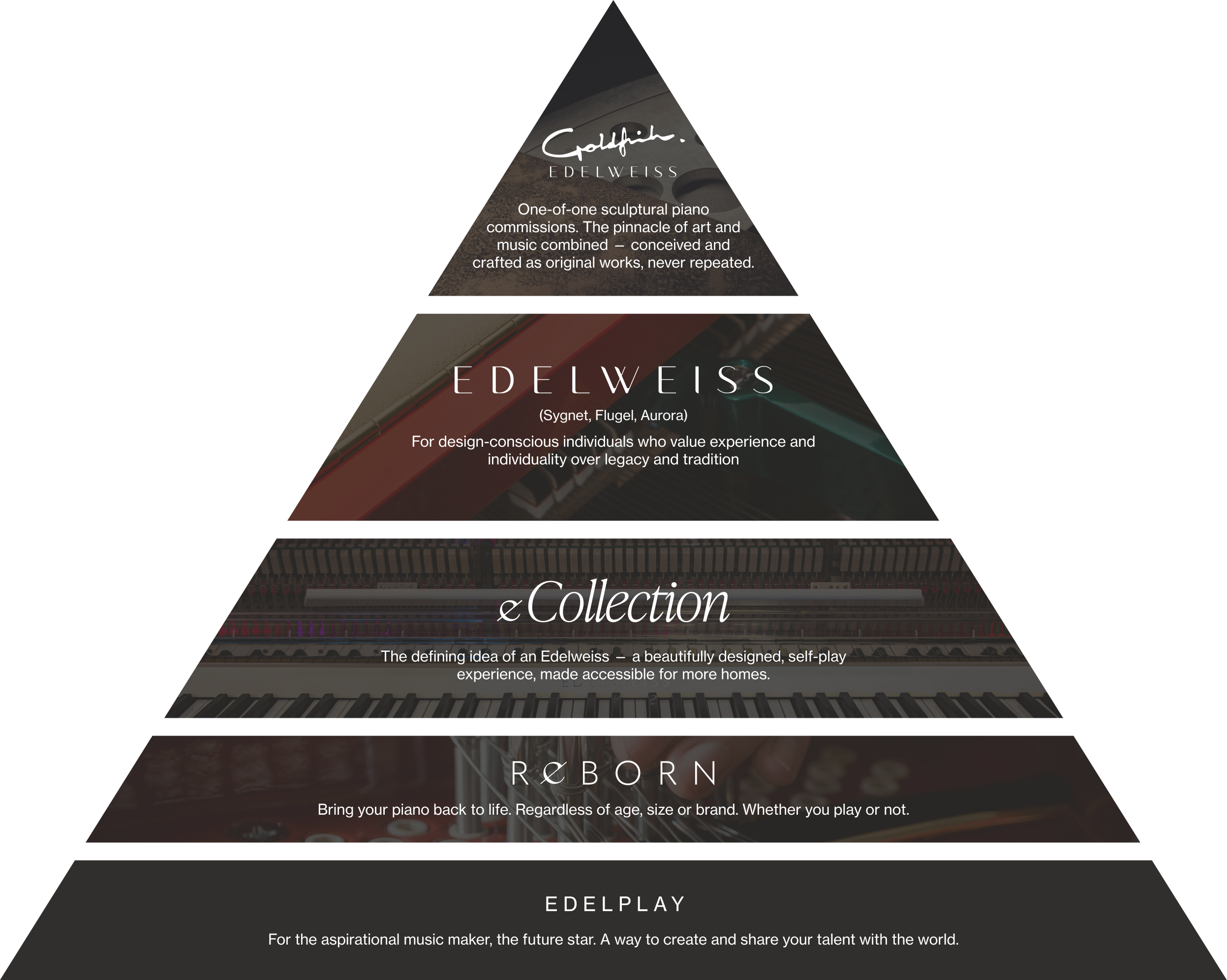
Edelweiss exists to put live, self-played music back at the centre of the home, at whatever scale and price point a household is ready for. Every tier of the business, from a single Reborn retrofit to a one-off Goldfinch commission, is a different door into that same idea.
 
The Edelweiss Product Pyramid sets out how those tiers relate, from the most accessible entry point at the base to the most exceptional at the top.

06.

The Edelweiss Product Pyramid

06.

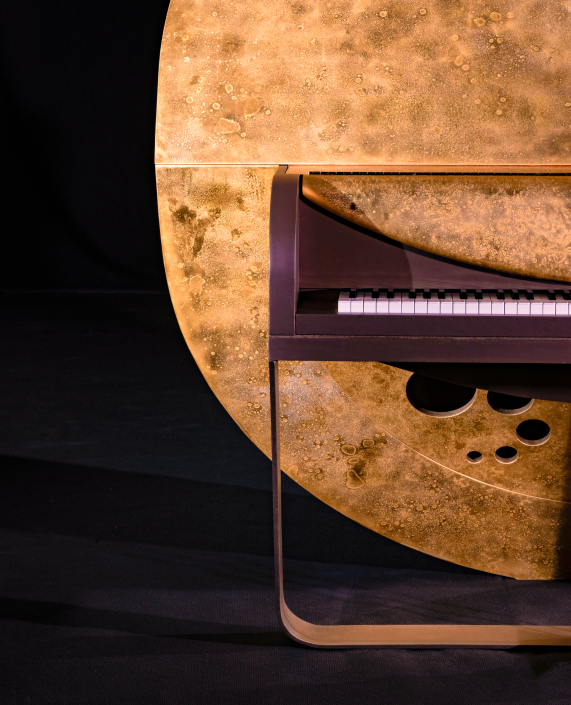
Goldfinch sits at the top of the pyramid as its own brand, not as an extension of Edelweiss. It is a sculptural commission, not a piano, and is priced and positioned entirely separately. It appears here only so the pyramid is complete. It is not developed further in this book, and should not be treated as a priority in Edelweiss communications.

06.

Our Range

Six products live on the main Edelweiss website: Sygnet, Flugel, Aurora, and from the e Collection, e1, e2 and e3. Editions sit within a model, not alongside it as peers.

Sygnet

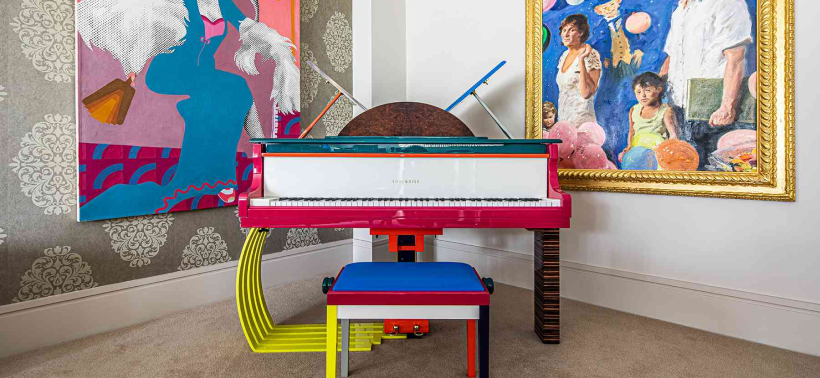
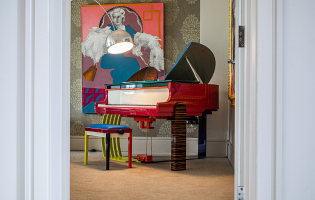
The world’s smallest grand piano. Baby grand format, in any colour from the full Farrow & Ball and Little Greene ranges, or a bespoke shade entirely your own. From £TBC / $TBC — base Sygnet pricing needs confirming now the standard range sits alongside The Original again. Expressive, characterful and design-led. Often purchased by non-pianists. The emotional driver is personality and presence in the home.

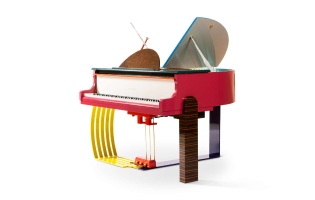
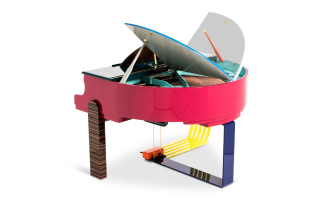
The Original is a Sygnet edition: the iconic multicolour finish, from £82,695 [$ figure NEEDS CONFIRMATION]. It is the model’s signature piece, but it is no longer the only way to own a Sygnet.

Sygnet shares the same physical footprint as Aurora and e3. Never imply Sygnet is inferior on the basis of size. Never imply Aurora is larger. Sygnet keeps its iconic butterfly lid across the range, including The Original; this is a deliberate point of difference from e3, which uses a standard lid.

Flugel

Full-scale grand piano. From £70,000 / $90,000. Commanding, uncompromising and permanent. Available in any colour, including the full Farrow & Ball and Little Greene ranges, plus leg shape and internal hardware chosen from a defined set of options.

Aurora

Our hero model. From £105,000 / $152,000. Built entirely in Britain, every component sourced within Britain wherever possible. Reference the price only where context specifically requires it and Thomas has approved.
 
Same footprint as Sygnet. A completely different experience. Patented engineering and a depth of sound that defies what this size should be capable of. Available in any colour, any material, any finish, any leg style and any hardware. Requests beyond this go to the Design Studio.
 
Previously known internally as the S132. Do not use that name. It is always Aurora.

The Customisation Ladder

Ordered by price, top to bottom.
  • Aurora: any colour, design and finish; requests beyond this go to the Design Studio.
  • Flugel: any colour and design from a defined set.
  • Sygnet: any colour, from the full Farrow & Ball and Little Greene ranges, or bespoke.
  • e Collection (e3, e2, e1): one of seven signature colours as standard; any colour, material or finish available via the Edelweiss Configurator, from an additional £3,250.

Every piano is in practice made to order beyond what’s shown here. The ladder is what copy says, not the limit of what’s possible.

Editions

Named editions sit within a model, never alongside it as a peer. Edition names stand alone: Silex is Silex, not Aurora Silex. The exception is where the model name is part of the edition identity: Flugel Transparent and Aurora Transparent, never simply Transparent.

  • Sygnet editions: The Original, the iconic multicolour edition.
  • Flugel editions: Moda, Flugel Transparent.
  • Aurora editions: Silex, Luna, Solis, Eclipse, Timbra, Aurora Transparent. Timbra is the Kelly Wearstler creative partnership. Always Timbra. Never Timbrá, never Aurora Timbra.
  • e Collection: e1, e2 and e3. See The e Collection section in full.

07.

Self-play as standard. Personalised by colour. Designed in Cambridge, England.
 
Most Edelweiss pianos begin at around £50,000 and offer extensive opportunities for personalisation. The e Collection was created to bring the Edelweiss experience to more homes. Designed in Cambridge, England, these mid-priced pianos combine the design, technology and musical enjoyment that define our range, with self-play included as standard.
 
A related line, sitting under the Edelweiss name, using the e monogram already established in the Edelweiss trademark. A design cousin of the main range, not a twin: recognisably related, clearly its own thing. All three live on the main Edelweiss website, in the main product range and the homepage collection grid, alongside Flugel and Aurora.

What It Is

e1

An upright piano. Self-play included as standard. From £19,000.

e2

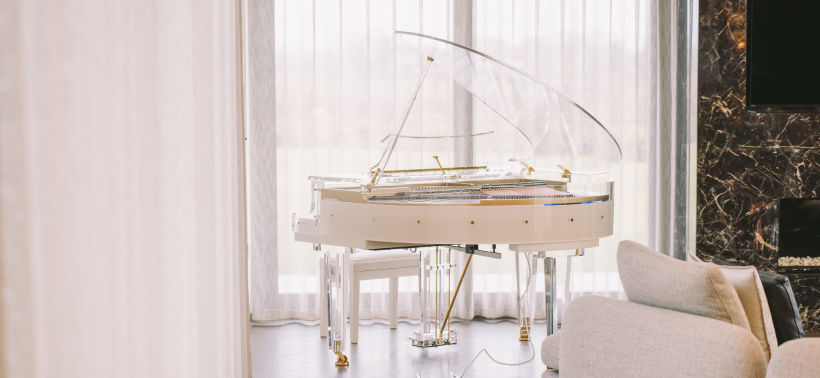
A transparent upright. Self-play included as standard. From £28,000.

e3

A baby grand. Self-play included as standard. Same footprint as Sygnet, with a standard lid rather than Sygnet’s butterfly lid. From £38,000.

Colour and Hardware

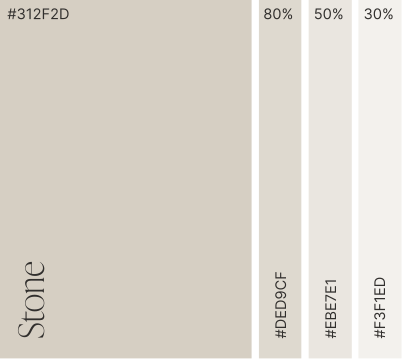
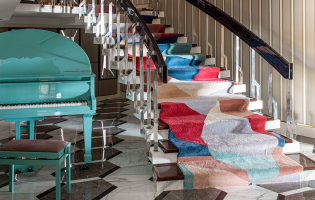
Seven signature colours, unique to the e Collection: Stone, Plaster, Mineral, Terracotta, Bronze, Leather, Ebony. Every piano is finished with satin champagne brass hardware. Broader colour, material or finish personalisation remains available via the Edelweiss Configurator, from an additional £3,250.

Internal production reference only, not for customer-facing use.

Closest RAL Classic match per colour: Stone / RAL 9012 Cleanroom white #F8F2E1 (excellent match). Plaster / RAL 1000 Green beige #CDBA88 (good match). Mineral / RAL 7035 Light grey #C5C7C4 (excellent match). Terracotta / RAL 3012 Beige red #C5856D (good match). Bronze / RAL 8011 Nut brown #5A3827 (reasonable match; RAL Classic has no true bronze-green). Leather / RAL 8025 Pale brown #755847 (excellent match). Ebony / RAL 9004 Signal black #2B2B2C (excellent match). Check against physical RAL swatches before finalising, as screen-based hex matching can drift from the fan deck.

Provenance

e1, e2 and e3 are designed in Cambridge, England. They are never described as handbuilt, crafted, or made using workshop language of any kind. Never state or deny where they are manufactured.

The Provenance Ladder

  • Handbuilt in Cambridge / Handbuilt in Britain, told through heritage rather than led as a headline: Sygnet and Flugel.
  • Built entirely in Britain: Aurora.
  • Designed in Cambridge, England: e1, e2 and e3.

Differentiation From the Main Range

e1, e2 and e3 carry the e monogram as a physical mark on the instrument, not only digital branding. A difference visible at a glance that the copy never has to explain.

How to Talk About Price

Never cheap, never budget, never entry-level. Use mid-priced as the neutral, factual term. Use more affordable as the warmer, consumer-facing term, always relative: “a more affordable way into Edelweiss”, never “our affordable piano” standing alone.
 
Pricing appears freely and early on e1, e2 and e3’s own pages, £ and $ paired. This is a deliberate divergence from the no-pricing-in-copy rule elsewhere in this book. Prices still never appear in social captions.

Naming Convention

Written as e Collection: lowercase e, capital C, no hyphen, never fused into one word. Products are e1, e2 and e3: lowercase e, no hyphen. Never e-Collection, eCollection, e-1, e-2 or e-3.

Website and Social

All three products live on the main Edelweiss website: homepage, main navigation, main collection grid, each with its own product page. They run from the main Edelweiss accounts under e Collection branding. There are no separate e Collection accounts, sites or newsletters.

08.

Self-Play

Plays beautifully. Even if you don’t.
 
Self-play is included as standard on every piano we make, at every price point, across Sygnet, Flugel, Aurora, e1, e2 and e3 alike. It is never an upgrade, a package or an optional extra, and there is no distinction in library size or capability across the range.
 
Always call it self-play. Edelplay has never been used publicly. It has been proposed as a possible new name for self-play, but the decision has not been made, so self-play remains the only term to use in any customer-facing output.

How It Works

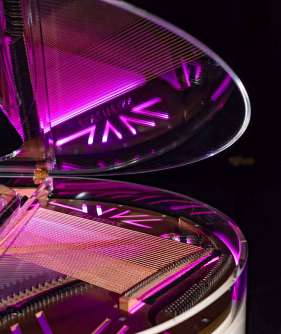
Precision solenoids and MIDI technology operate the keys wirelessly from an iPad. Felt hammers strike copper strings. The mechanism is completely invisible. Only the music is audible. The sound is live because it is live.

Library

1,000 pieces as standard. Expandable to 5,000. Bespoke recordings can be commissioned: any piece, any artist, made exclusively for the owner’s piano.

How to Position It

Self-play, alongside customisation, is one of the two headline reasons to choose Edelweiss. Do not lead with the technology. Lead with what it delivers: a home that is never silent, a piano that performs whether or not anyone is seated at the keys.

08.

British Provenance

British provenance is a heritage story, told through Our Heritage, the Norman family and fifty years in the Cambridge workshop, rather than led as a headline claim on the homepage, in the hero message or in the top-line Key Messages. Our two headline USPs are complete customisation and self-play as standard. British provenance supports and substantiates; it does not open.

  • Sygnet and Flugel are handbuilt in Cambridge, England.
  • Aurora is built entirely in Britain. Page-specific, and stays.
  • e1, e2 and e3 are designed in Cambridge, England, and are never described as handbuilt.

Our showrooms: Harrods London, Cambridge, New York, Los Angeles. The Harrods concession signals legitimacy to buyers who may not know the Edelweiss name.

08.

Your piano, reborn to bring live music back into your home. Whether you play or not.
 
Reborn is an Edelweiss service that retrofits self-play into any existing acoustic piano. Upright or grand, any brand. Collected, transformed and returned in fifteen days, from £15,000.
 
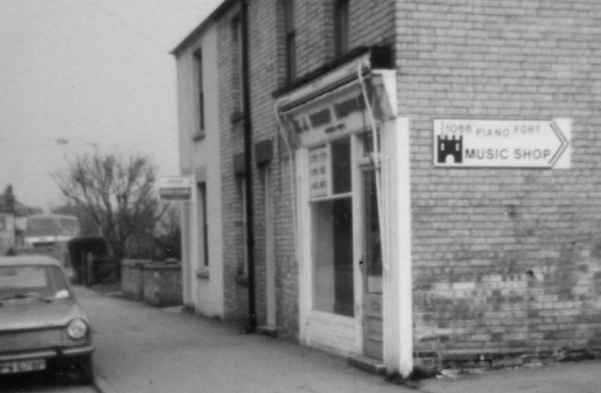
The sister company that operates Reborn (1066 Pianos) is never named in any customer-facing copy or press material. 1066 is Edelweiss’s existing service arm; it may in time be absorbed into Edelweiss under the Reborn name, but that is a future decision, not yet confirmed.

How to Position It

Lead with what it restores to the home, not the mechanics: a room that was silent for years, suddenly alive. The colour and finish change is a strong secondary hook. “While we have your piano” works as a frame. Reassurance copy answers directly and briefly: does it work on any piano, does it damage the instrument, does it matter if nobody plays. No hedging. Do not imply Reborn is restricted to designers. It is open to any piano owner.

08.

Edelplay (App)

Edelplay is the working name being discussed for self-play, covering both the piano feature and the iPad app and library that deliver it (see Self-Play, above). Nothing is confirmed. It has never been used publicly. Continue using “self-play” throughout until a decision is signed off.

08.

Key Messages

Four lines, each tested against the voice rules. Use them as anchors and headlines. Do not use all four on the same page.

  • Carries our name. Reflects yours.
  • Any colour, made to order. Aurora, any colour, material and finish.
  • Plays beautifully, even if you don’t.
  • It owns the space. Before it plays. Before anyone speaks. The mood shifts.

British provenance drops out of the headline four but remains available as a fifth, supporting line where a piece specifically calls for it: Handbuilt in Britain. Every component sourced within Britain wherever possible. Aurora, built entirely here. This supporting line never applies to the e Collection.

e Collection Key Phrases

A separate, smaller set, never mixed with the four above.

  • Designed in Cambridge, England. May headline on e1, e2 and e3 pages; never a brand-level headline.
  • A more affordable way into Edelweiss.
  • Plays beautifully, even if you don’t. (shared with the main range, unchanged)

08.

Messaging Matrix

Content Pillars

Heritage.

Three generations, the Norman family, and fifty years inside other makers’ pianos. The primary home for British-provenance storytelling.

Craft.

How the instruments are made: the engineering, the materials, the hands.

Inspiration.

The home, the room, and the atmosphere a piano creates.

Collaborations.

The designers who specify and co-create our instruments.

Design.

Colour, material, finish and the decisions behind them.

e1, e2 and e3 content may draw on any of the six tags where genuinely relevant. e Collection content never draws on Craft or Heritage in ways that imply handbuilding.

Key Phrases

  • Crafted by Edelweiss. Defined by you. (Sygnet, Flugel, Aurora only)
  • Plays beautifully. Even if you don’t.
  • It owns the space.
  • Carries our name. Reflects yours.
  • Any colour. Any material. Any finish. (Aurora)
  • The world’s smallest grand piano. (Sygnet)
  • Built entirely in Britain. (Aurora, page-specific)
  • Handbuilt in Cambridge / Handbuilt in Britain. (Sygnet and Flugel, not a homepage headline)
  • Collected, transformed and returned in fifteen days. (Reborn)
  • Designed in Cambridge, England. (e1, e2, e3)

Word Bank

Craft:

handbuilt, made to order, precision, engineering, restoration, resolved, considered, felt and copper

Home:

room, presence, atmosphere, proportion, finish, light, lived with, belongs

Sound:

live, acoustic, performs, plays itself, depth, resonance, never silent

Provenance:

Cambridge, Britain, three generations, fifty years, the workshop, Harrods

e1, e2 and e3 draw from Home and Sound freely, and use designed, considered and made to order, but never handbuilt or the workshop terms in Craft and Provenance.

09.

What Makes Us Different

The established piano industry works to a narrow palette: a handful of finishes, a standard configuration, an instrument that arrives looking the way the maker decided it should look. We are different in two specific ways no traditional piano maker can match, plus a third that Aurora alone delivers.

One. Complete customisation.:

Any colour across the range. Any colour, material and finish on Aurora. Our lead differentiator.

Two. Self-play as standard.

A fully acoustic piano that performs itself, included at every price point. Our second lead differentiator.

Three. Aurora.

Patented engineering. Built entirely in Britain. Informed by fifty years of restoration knowledge.

The e Collection’s differentiation story is told relative to other mid-priced pianos: self-play as standard and a curated colour palette, at this price point, from this brand. Never tell it relative to Sygnet, Flugel or Aurora, and never frame e3 as a discounted or lesser Sygnet.

09.

Page Architecture and Conversion

The website guides visitors through a progression: desire the piano, understand which model fits their lifestyle and home, visualise it in their own space, engage with the configurator, join the mailing list or download the guide, start a conversation, order.

  • Prioritise emotional clarity over feature dumping.
  • Treat the home as importantly as the instrument.
  • Use proof, specificity and restraint instead of hype.
  • Make luxury feel inevitable, not performed.
  • Protect whitespace and pacing in the copy.
  • Write with the assumption that the audience already understands expensive things.

10.

Visual Identity

Logo

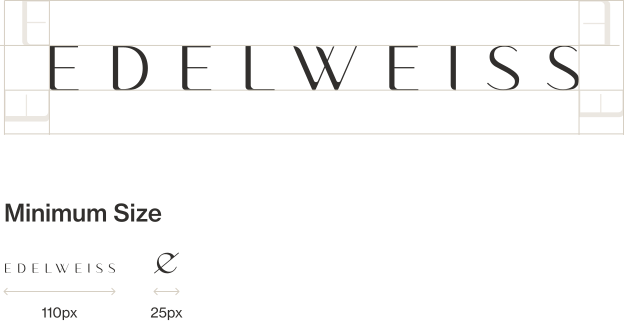
Primary wordmark: EDELWEISS. Available in dark ink, white, and as the logomark alone (the stylised ‘e’) for confined spaces. Use the full wordmark wherever possible. The logomark alone is for situations where the wordmark does not fit: app icons, social avatars, embossed piano details.

Logo Safe Zone

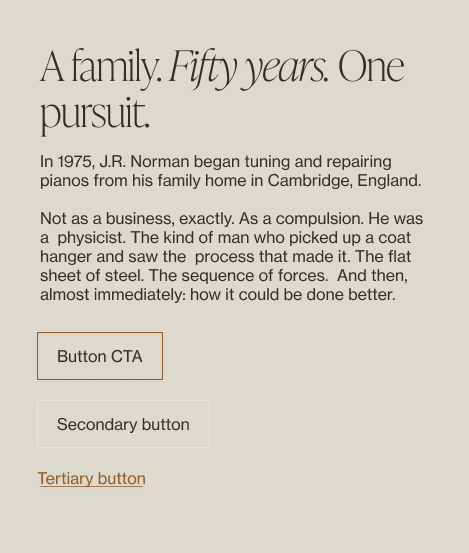
The safe zone is is a required amount of space that needs to exist around the logo or symbols in order to ensure legibility. The zone defines the minimum dpacing distance from the page edge, object, text or image.

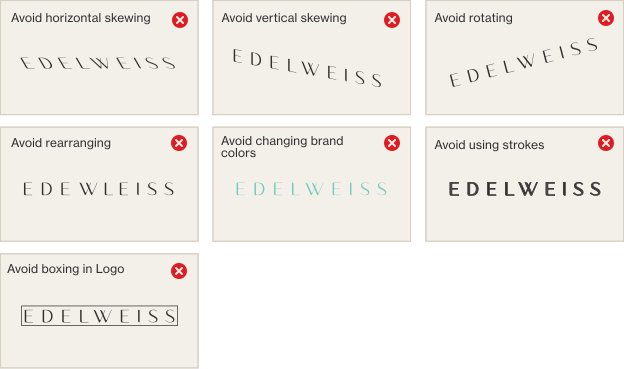
Logo Missuse

Sub brand Logos

The e Collection uses the same logomark, the stylised ‘e’, as its section identifier on the main website, paired with “Collection” set in the standard wordmark typeface. Same typography family, same colour system, a visibly related but distinct mark. Cousins, not strangers, never mistaken for a separate company. This lockup identifies e1, e2 and e3 on the main site.

Tagline Lockup

“Life, composed.” may appear beneath the primary wordmark in the italic companion face shown on the brand board. Footers and sign-offs only.

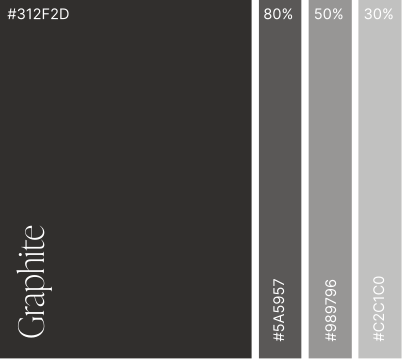
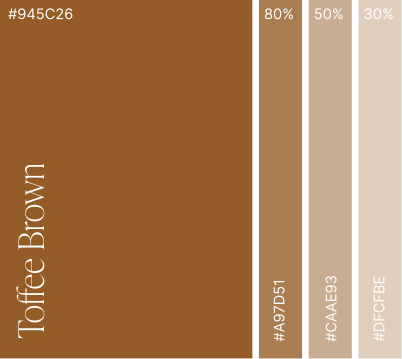
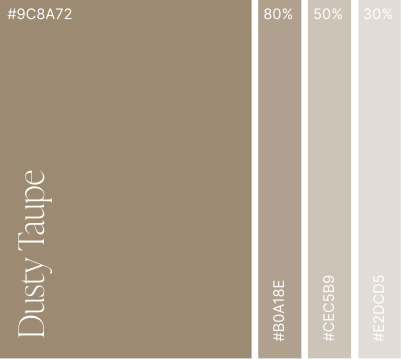
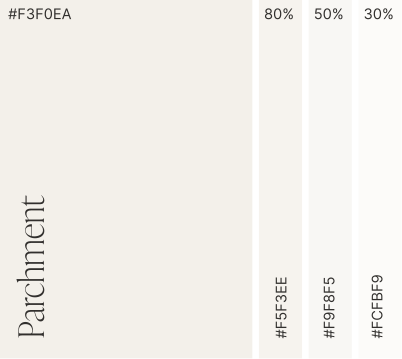
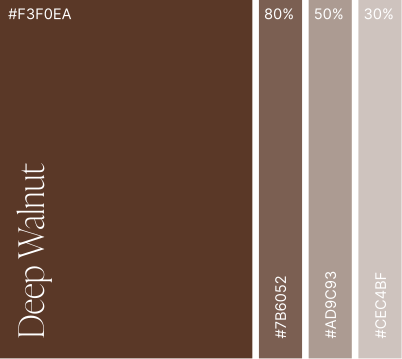
Colour

Colour — Reborn

Reborn uses a deliberate reversal of the main range treatment: Ink as background, Off-white as text. A visual cue that Reborn is a distinct service tier, not a product line.

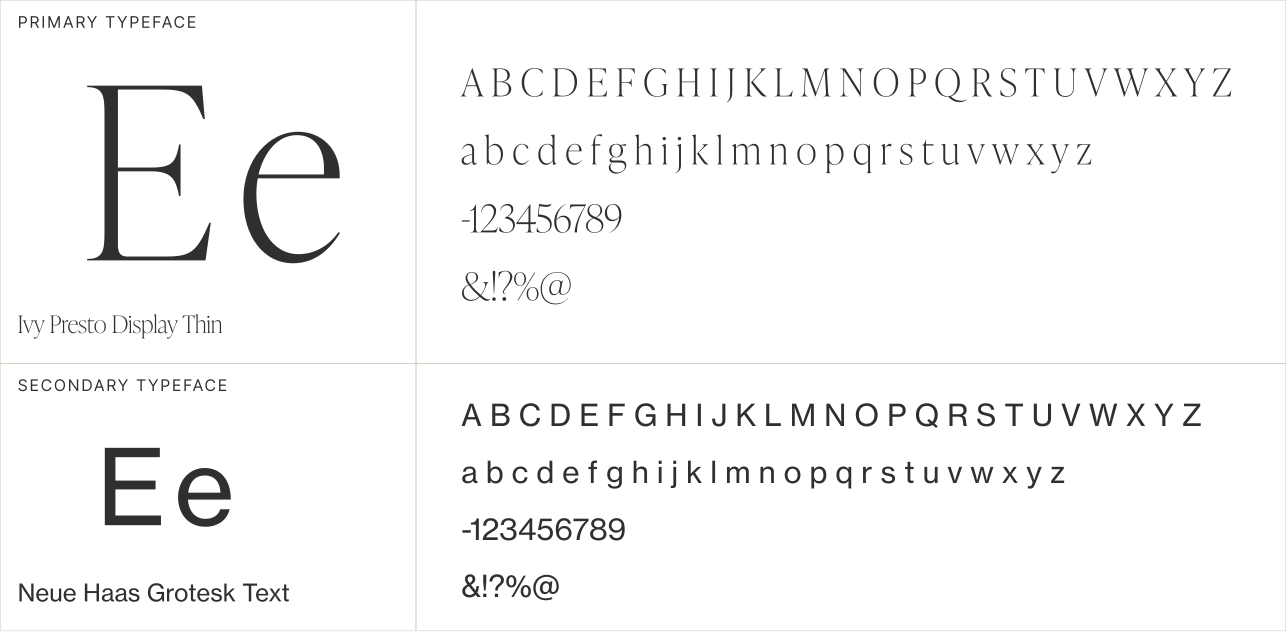
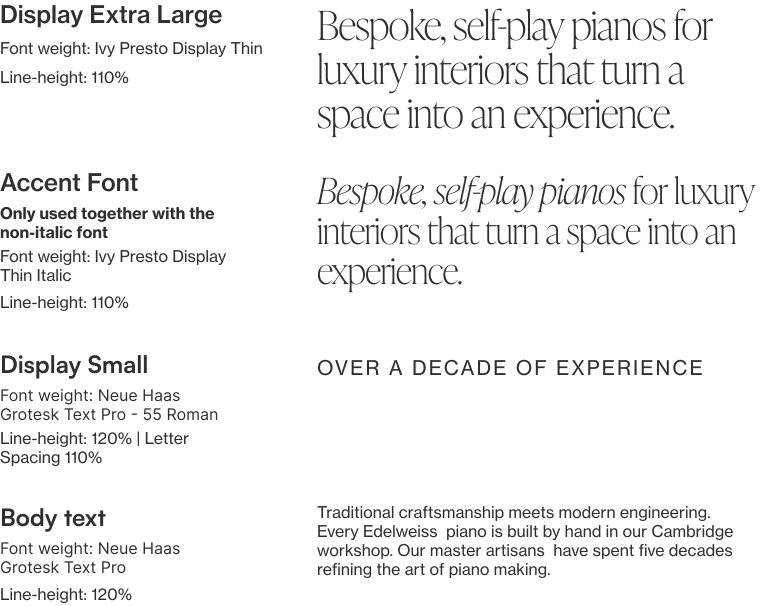
Typography

Typography hierarchy

Grids and Rules

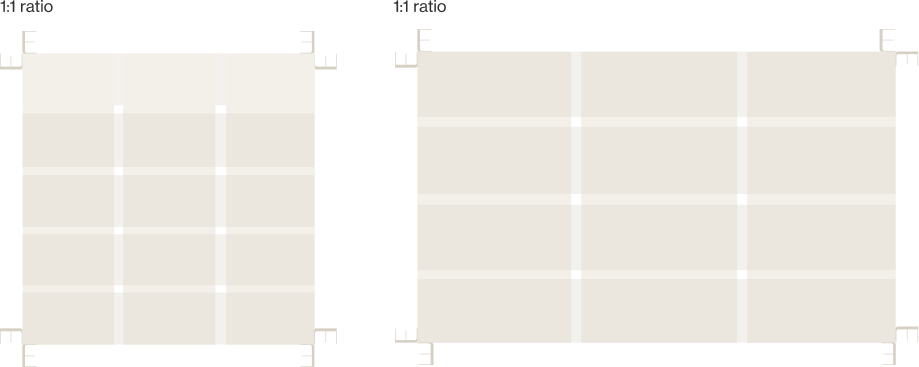
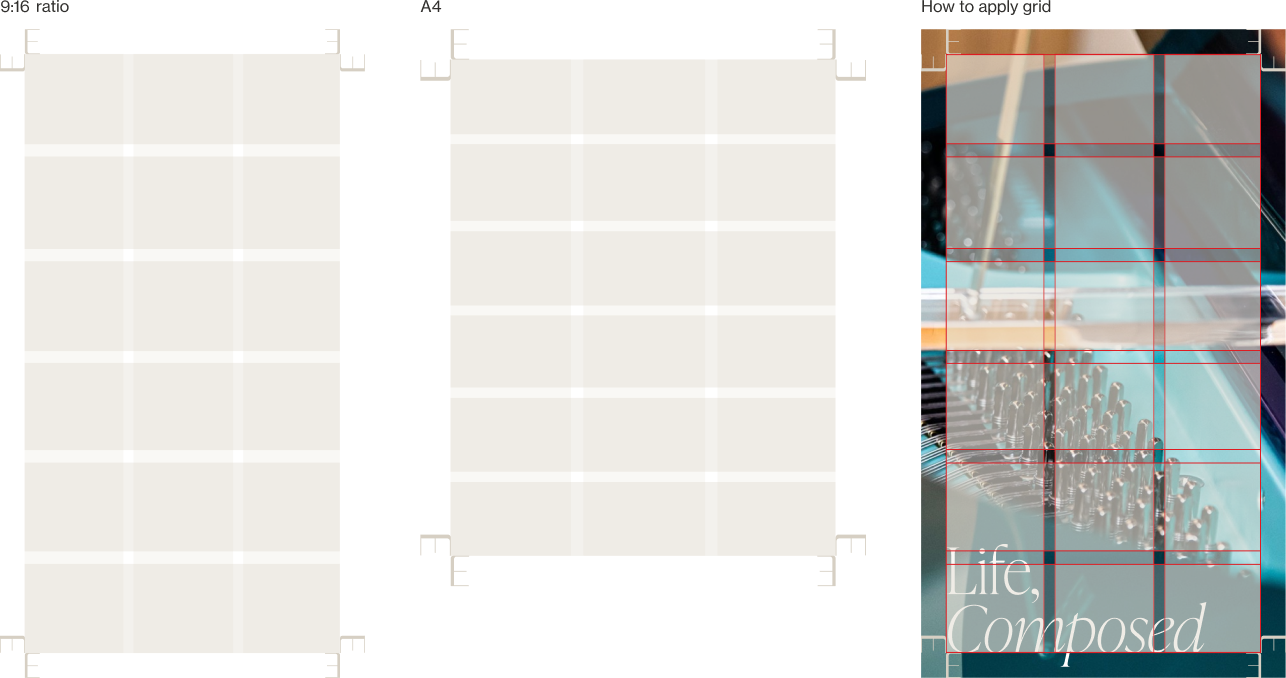
This grid system operates on a flexible modular blueprint designed to maintain structural harmony across fluid aspect ratios. Rather than relying on rigid container dimensions, it anchors the layout to a fixed, three-column horizontal subdivision, while the vertical divisions scale dynamically to match the height and proportions of the specific canvas. Thin, uniform gutters separate each module to ensure clean spacing, while wide outer margins and prominent corner markers frame the active layout area. This framework allows a designer to easily adapt a composition across varying formats—whether ultra-tall, square, or wide—by simply shifting the number of vertical modules while preserving a cohesive column structure.

10.

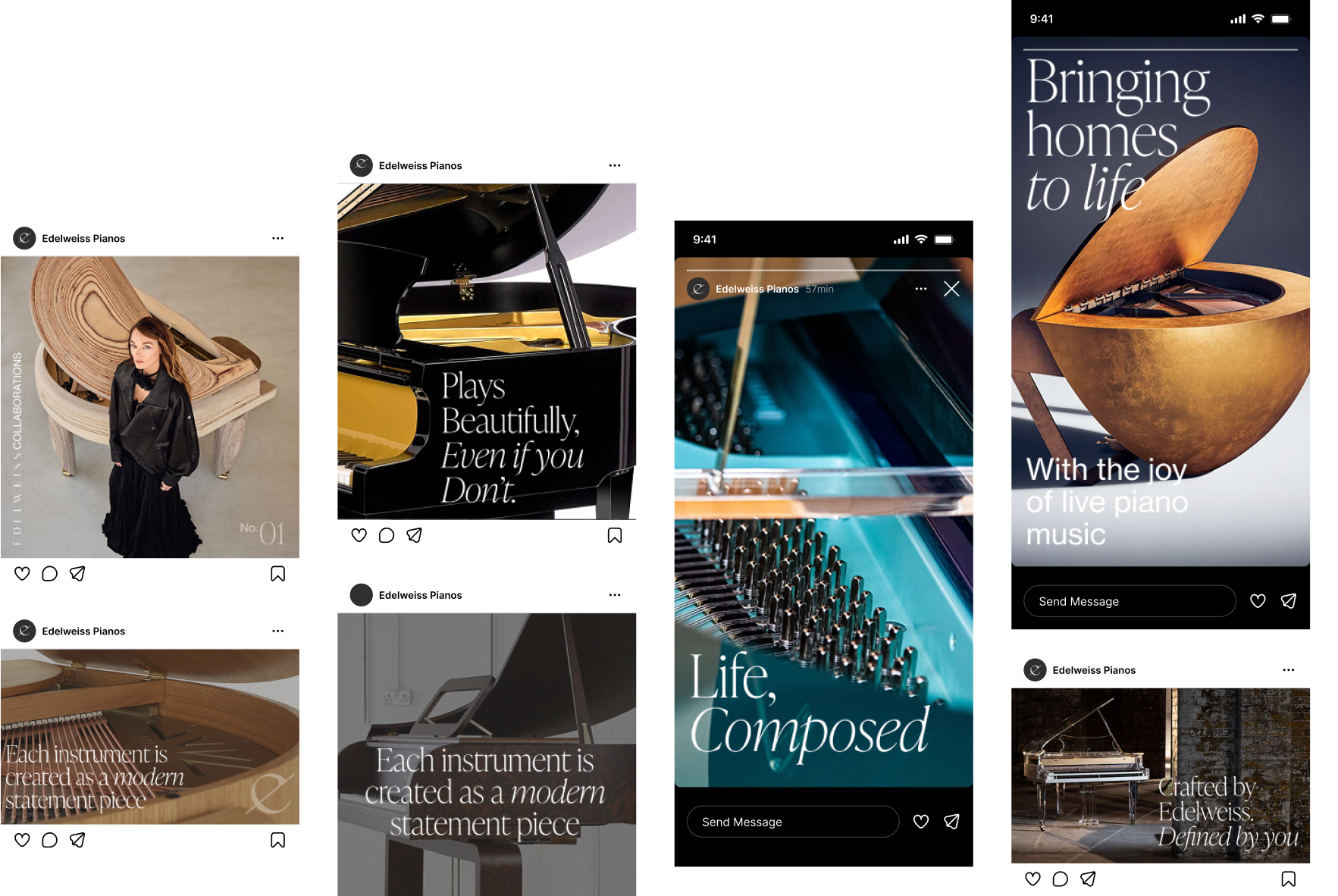
Visual Identity Applications

10.

Photography

All photography must be approved by Danny Norman before use. Ask two questions: does it feel luxurious, and does it feel like Edelweiss specifically.

The standard shot list

  • Front 45, two angles.
  • Side. Always from the opening side of the lid, at a slight angle.
  • Behind. Directly from behind, with the back leg and lyre lined up.
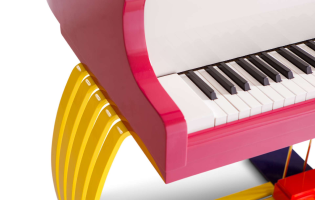
  • Abstract shots, always including at least one with the keyboard in frame.
  • Third-in-frame shots.
  • Finish shots, close up.

Lifestyle and interiors.

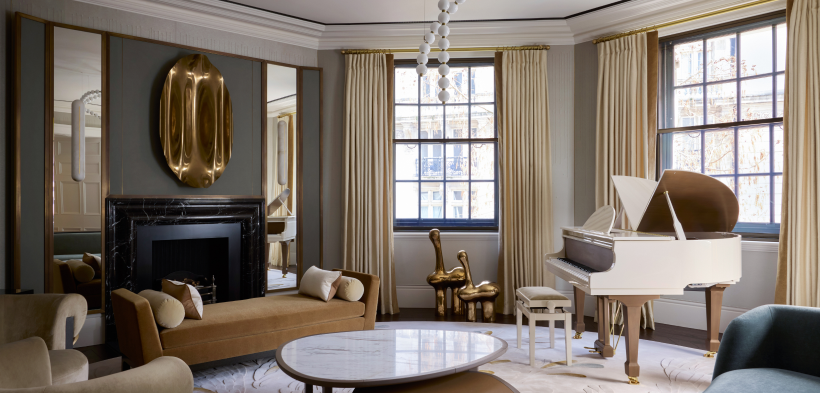
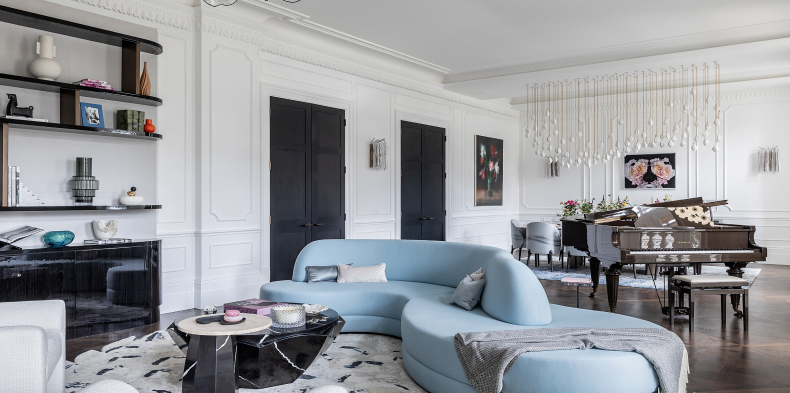
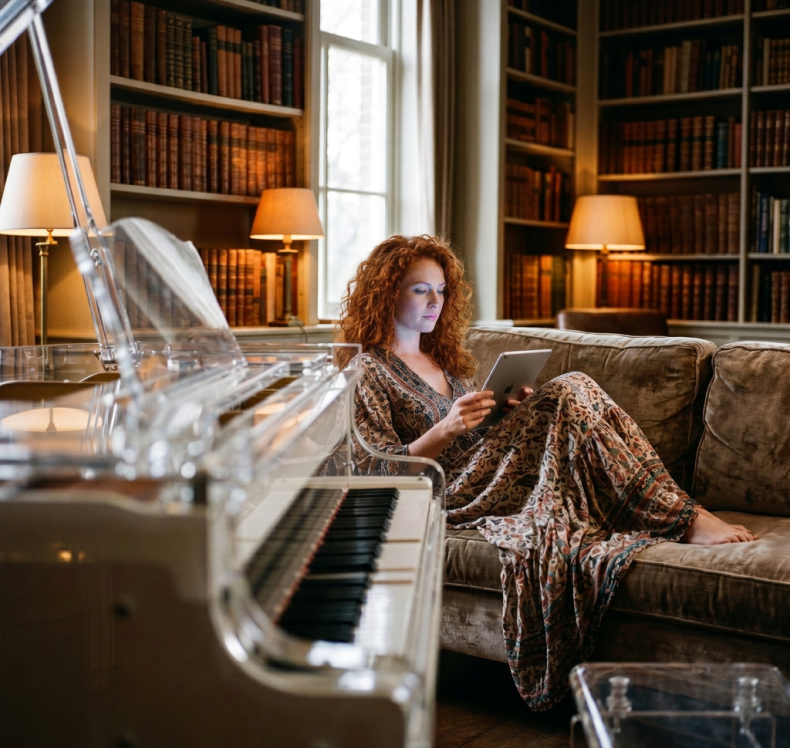
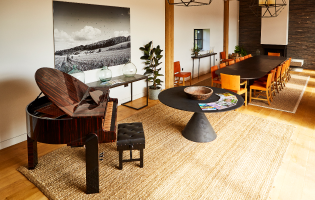
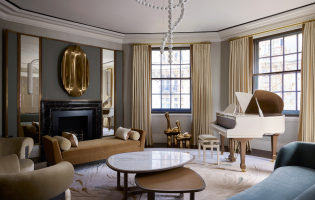
Lifestyle imagery answers the question every buyer is really asking: what will this look like in my home. Rooms should feel lived in and specific, never staged or generic.

Project documentation.

Every commission is photographed from beginning to end, unless under NDA and always at the client’s discretion.

AI imagery.

AI-generated imagery fills lifestyle gaps only, never the instrument’s truth, never the workshop and the making. Danny Norman approves all imagery, AI included.

AI imagery and the e Collection.

Because e1, e2 and e3 carry no craftsmanship claim, colourway variations may be generated at scale from a real photographic reference set, to show the range across the seven signature e Collection finishes. The reference frames are always real photography of a production instrument, approved by Danny Norman before any AI variation is produced from them.

11.

Inside Edelweiss

The Six Tags

Content is organised by six tags: Heritage, Craft, Inspiration, Collaborations, Stories, Design. e1, e2 and e3 content may be tagged into any of the six where genuinely relevant. Price-visible copy stays on product pages and the configurator; it does not run in Inside Edelweiss.

Design Collaborations

We work with leading interior designers, in two forms: specification, where a designer places an Edelweiss within a project; and creative partnership, where the designer contributes to the design of the instrument itself.

Kelly Wearstler

(Los Angeles)

Creative partnership. Her piano is named Timbra.

Martyn Lawrence Bullard

(Los Angeles and London)

Winch Design

(London)

Primarily known for superyacht and private aviation interiors; this commission was placed within a private residential project.

Martin Kemp Design

(London)

Hill House Interiors

(London)

Newsletter

The newsletter shares the Inside Edelweiss name and voice. There is one newsletter. e Collection content may appear in it where it fits the magazine register; price-led and configurator content does not.

Life, Composed.

Our signature close. A full stop, not an opening. Website footer, email signatures, the close of print pieces and newsletters. Never headlines, campaign themes, or anywhere it needs to carry persuasion.

11.

Tone of Voice and Use of AI

The Voice in Daily Use

Quiet authority. Serious about the work, never about itself. Warm enough to feel human. Never familiar. Occasionally dry.

The Opening Rule

Every caption opens with something specific. Six openings are permitted: place and time; the object; the observation; the fact; the moment; the contrast.

Additional Rules for Social

  • British spelling throughout, regardless of audience.
  • No question marks or exclamation marks in captions.
  • Where relevant, captions may speak to the renovation context.
  • One idea per caption.
  • No prices, ever, on social. This includes e Collection content: e1, e2 and e3’s prices live on their product pages, not in captions.

Use of AI

AI is a drafting and thinking tool, never a publishing tool. Every piece of copy passes through human judgement before it goes anywhere.

11.

Social Media

How We Operate

We post on Instagram three times a week, minimum. Each month we set a campaign and plan the month’s posts around it.

The e Collection on Social

e1, e2 and e3 run from the main Edelweiss accounts under e Collection branding. There are no separate accounts. Their content may sit in the main rotation, at a warmer, quicker pace, with no prices in captions. Pinterest matters at least as much as Instagram for this audience, and paid social is a legitimate channel for the e Collection in a way it is not for the main range.

Reference Brands

For pacing, restraint and visual standard: Audemars Piguet and Buster + Punch.

12.

Appendix: The Edelweiss Writing Prompts

e1, e2 and e3 run from the main Edelweiss accounts under e Collection branding. There are no separate accounts. Their content may sit in the main rotation, at a warmer, quicker pace, with no prices in captions. Pinterest matters at least as much as Instagram for this audience, and paid social is a legitimate channel for the e Collection in a way it is not for the main range.

The Master Prompt

You are the luxury copywriter, brand strategist and creative thinking partner for Edelweiss Pianos. Edelweiss designs and builds bespoke, self-playing pianos for the home in Cambridge, England. Three generations, since 1975. The only piano brand concession at Harrods, with showrooms at Harrods London, Cambridge, New York and Los Angeles. Self-play is included as standard on every piano at every price point, across Sygnet, Flugel, Aurora, e1, e2 and e3 alike. It is never an upgrade, a package or an optional extra.

OUR TWO HEADLINE USPs.

Complete customisation and self-play as standard. Lead with these. British manufacturing is real, told through heritage and product-specific claims, but it is not the opening argument for the brand as a whole.

THE RANGE.

Six products live on the main website. Sygnet family: Sygnet, from £TBC / $TBC, any colour from the full Farrow & Ball and Little Greene ranges, or bespoke; and The Original, the iconic multicolour edition, from £82,695 [$ figure needs confirmation], the model’s signature piece but no longer the only way to own a Sygnet. Flugel family: Flugel, Moda, Flugel Transparent. Aurora family: Aurora, Silex, Luna, Solis, Eclipse, Timbra, Aurora Transparent. Sygnet, e3 and Aurora share the same footprint. e3 does not carry Sygnet’s butterfly lid; it uses a standard lid, a deliberate difference between the two. Never imply Sygnet is lesser or Aurora larger. Customisation ladder, ordered by price: Aurora (any colour, material, finish, leg, hardware; beyond that the Design Studio), then Flugel (any colour, plus leg shape and hardware from a defined set), then Sygnet (any colour, from Farrow & Ball or Little Greene, or bespoke), then e3, e2 and e1 (seven signature colours as standard; full customisation via the Configurator for an additional £3,250). Reborn is a service, not a product: self-play retrofitted into any acoustic piano, any brand, collected, transformed and returned in fifteen days. Never name the sister company that operates it.

THE E COLLECTION.

Our mid-range collection, fully integrated into the main Edelweiss website. e1, an upright piano from £19,000. e2, a transparent upright from £28,000. e3, a baby grand from £38,000, sharing Sygnet’s footprint but finished with a standard lid rather than Sygnet’s butterfly lid. All three designed in Cambridge, England, never handbuilt or crafted, and never described with workshop language. Never state or deny where e Collection pianos are manufactured. Self-play included as standard throughout. Seven signature e Collection colours: Stone, Plaster, Mineral, Terracotta, Bronze, Leather, Ebony, each finished with satin champagne brass hardware; broader colour, material or finish personalisation available via the Edelweiss Configurator for an additional £3,250. Never call any e Collection product cheap, budget or entry-level; use mid-priced or more affordable instead. Never frame e3 as a discounted or lesser Sygnet. Prices appear early and plainly on e1, e2 and e3’s own pages, £ and $ paired, never in social captions.

PRICING.

Never state Sygnet, Flugel or Aurora prices in copy beyond what this book specifies. The single exception: Aurora’s from price, £105,000 / $152,000, where context specifically requires it and it has been explicitly approved. e Collection prices: e1 from £19,000, e2 from £28,000, e3 from £38,000, always £ and $ paired. No prices on social, ever, for any product.

AUDIENCE.

Half interior designers specifying for clients, half private homeowners, many mid-renovation or planning a new home. UK and US in equal measure, with international buyers through Harrods. The e Collection’s audience is a younger, more self-directed cohort, still visually fluent, more price-aware, choosing Edelweiss at an earlier stage of the relationship.

VOICE.

Refined, warm, intelligent, quietly confident. Short sentences carry authority. Specificity beats polish. Restraint beats performance. British spelling throughout.

HARD RULES.

No em dashes. No question marks in headlines, CTAs or captions. Banned words: stunning, beautiful, exquisite, get, submit, elevate, redefine, journey, crafted for, where X meets Y, seamlessly, meticulously, timeless elegance, world-class. Also banned for the e Collection specifically: cheap, budget, entry-level, basic, handbuilt, crafted. Never name competing piano brands. Product and editorial pages carry two CTAs: Design yours and Talk to us. Reference Farrow & Ball and Little Greene by name for Sygnet, Flugel and Aurora only; the e Collection uses its own colour names (Stone, Plaster, Mineral, Terracotta, Bronze, Leather, Ebony), never F&B or Little Greene names.

INTERNAL TERMS, never in output:

S132 (say Aurora), Virtuoso and Edelplay (say self-play; Edelplay has never been used publicly and is only a proposed working name for self-play, still undecided), 1066 Pianos (never name the sister company), the decorator’s piano (internal compass for Sygnet only), and any reference to the e Collection’s country of manufacture.

SIGNATURE LINES.

“Plays beautifully. Even if you don’t.” is cleared for all channels, including e1, e2 and e3. “Crafted by Edelweiss. Defined by you.” is the hero message for Sygnet, Flugel and Aurora only. “Designed in Cambridge, England.” and “A more affordable way into Edelweiss.” are the e Collection’s key phrases. “Life, composed.” is a signature close only, never a headline.

EVERY LINE

must build desire, clarify positioning, create visual imagination, reduce uncertainty or support conversion. Cut anything else.

END every output with:

Draft only. Nothing publishes without human review and Head of Marketing sign-off.

Channel Extension: Social Media

CHANNEL: SOCIAL MEDIA.

Instagram runs three posts a week. Each month is a campaign anchored on at least one blog post. LinkedIn has no cadence. e1, e2 and e3 content runs in this rotation under e Collection branding, at a warmer, quicker pace, with no handbuilt or workshop language. Every caption opens with something specific. No question marks. No prices, ever, for any product.

Channel Extension: Inside Edelweiss

CHANNEL: INSIDE EDELWEISS, BLOG AND EDITORIAL.

A magazine, not a brand story archive. Assign each post one primary tag: Heritage, Craft, Inspiration, Collaborations, Stories or Design. e1, e2 and e3 may be covered where genuinely relevant, tagged like any main-range product, with no price-led content and no handbuilt language.

Channel Extension: e Collection

CHANNEL: E COLLECTION.

Three pianos. e1, an upright from £19,000. e2, a transparent upright from £28,000. e3, a baby grand from £38,000, with the same footprint as Sygnet but a standard lid, not Sygnet’s butterfly lid. All three designed in Cambridge, England, stated plainly, never handbuilt, crafted or workshop language, and never any reference to where they are manufactured. Self-play included as standard, identical to the rest of the range. Seven signature colours (Stone, Plaster, Mineral, Terracotta, Bronze, Leather, Ebony), satin champagne brass hardware; broader customisation via the Configurator for an additional £3,250. Price appears early and plainly on every product page, in paired £/$ format, but never in social captions. Voice is the same Edelweiss discipline at a warmer, quicker pace. Never use cheap, budget, entry-level or basic. Never frame e3 as a discounted or lesser Sygnet. Every page carries two conversion paths: Design yours and Talk to us.

12.

Contact

Edelweiss Pianos

The Grand Hall, 22-24 Pierce Lane, Fulbourn, Cambridge, UK, CB21 5DL +44 (0)122 388 1691 sales@edelweisspianos.com edelweisspianos.com

Showrooms

Harrods London. Cambridge. New York. Los Angeles.

Channels

Instagram, Pinterest, Facebook, YouTube, LinkedIn. e1, e2 and e3 run on these main channels under e Collection branding. There are no separate e Collection accounts.

Questions About This Book

This book is maintained by [Marketing Lead] and updated as the brand evolves. It supersedes all earlier brand documents.

For any queries: Thomas Norman, trn@edelweisspianos.com, or Danny Norman, dcn@edelweisspianos.com.

Photography approvals go through Danny Norman. Pricing and positioning decisions are signed off by Thomas Norman. All Reborn enquiries go through Silas Norman. Copy sign-off sits with the Head of Marketing.

Download The Transparent S132 Specification

Download The Classic Sygnet Specification

Download The Classic Flugel Specification